Three Generations Under One Roof: A Holistic Approach to Family Wellness
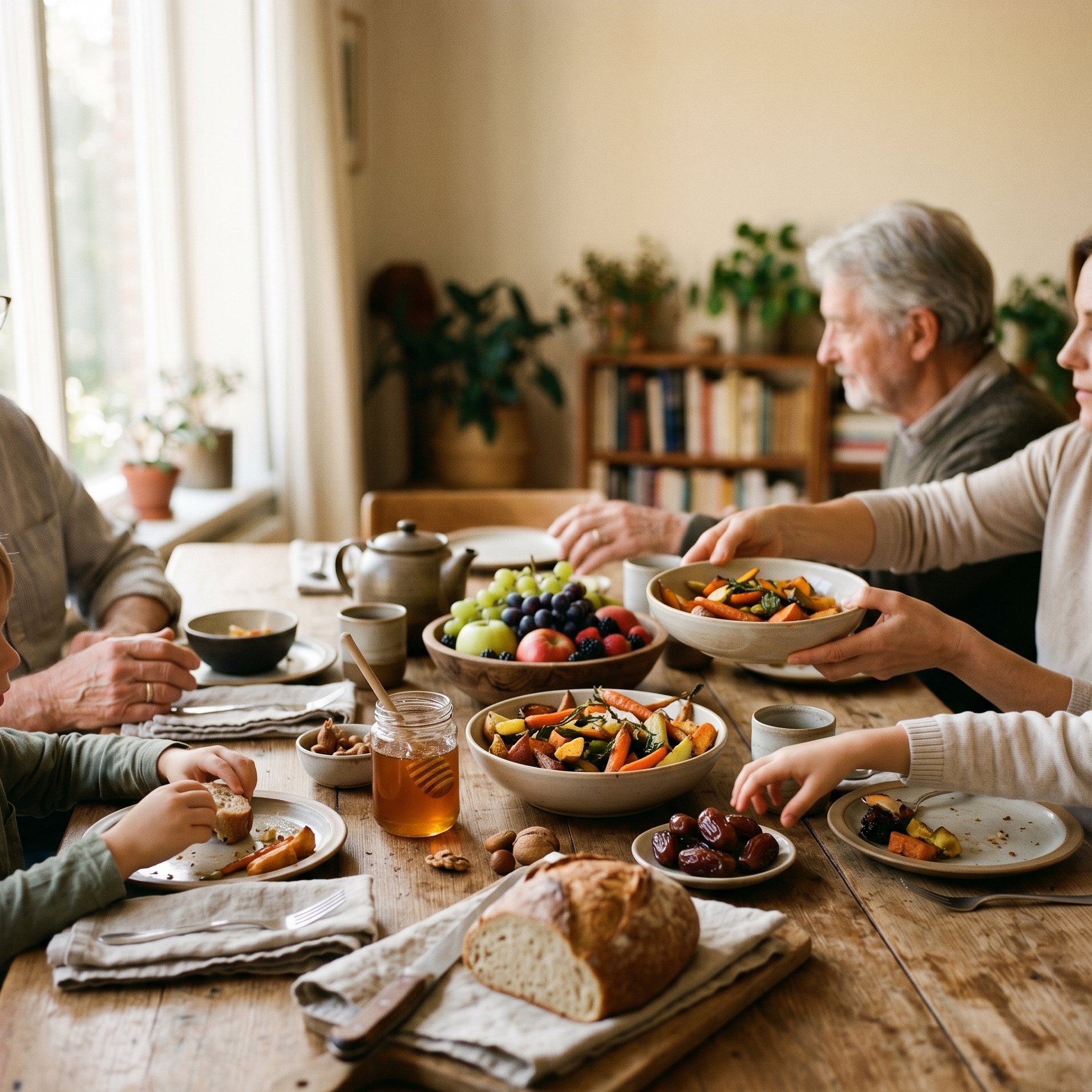
In a lot of cultures, the idea of three generations living close together, or under the same roof entirely, is just how things have always been. Grandparents helping raise the kids. Parents in the middle, holding everything together. Children growing up with their elders nearby. Across Muslim, Asian, African and many other communities, this is not unusual. It is the norm.
The strange thing is, the wellness world rarely speaks to this. Most health content is built for the single 30-year-old optimising their morning routine. It rarely thinks about the parents in the middle who are looking after kids and ageing parents at the same time, or the grandparents who want to stay strong and engaged as long as they can.
But every generation in a family has its own wellness needs. And when you understand what each one needs, the whole household runs better.
The science actually backs the tradition
Research is increasingly catching up with what many cultures have always known. Studies show that growing up in a multi-generational household is associated with better cognitive outcomes later in life. Older adults living with family tend to have lower rates of depression, better cognitive function and longer life expectancy compared to those who live alone. Children raised around their grandparents tend to develop more emotional resilience, better social skills and a stronger sense of identity.
It is not a sacrifice. It is a structure that, when it works, makes everyone in it healthier.
That said, every generation has different needs. And caring for all of them well takes a bit of intention.
The children: building foundations early
Children's bodies and immune systems are still developing. The habits they build now shape the adults they become. The good news is that the basics matter more than anything fancy.
Real food. The more whole, unprocessed food a child eats, the better their gut, immunity, mood and concentration tend to be. You do not need to be perfect. A meaningful reduction in ultra-processed foods makes a noticeable difference within weeks.
Outside time. Children need to be outside. Sunlight, fresh air, movement, dirt. Their nervous systems regulate better, their sleep improves and their vitamin D levels stay healthier. UK guidance actually recommends a daily vitamin D supplement for all children over one through autumn and winter, because we simply do not get enough sunlight here for skin production from October to March.
Honey for coughs. This is one of those traditional remedies that modern research has fully validated. NICE guidelines in the UK now recommend honey as a first-line treatment for coughs in children over one year old, ahead of cough syrups. A teaspoon of raw honey in a little warm water often works better than anything from the pharmacy. Note for new parents: honey should never be given to babies under one year old due to the risk of infant botulism.
Sleep and routine. Children thrive on rhythm. Consistent meal times, consistent bedtimes, consistent wind-down routines. The science of circadian rhythm applies to a six-year-old just as much as it does to a forty-year-old.
The parents in the middle: holding everything together
If you are the parent in the middle, you already know how it feels. You are caring for children who need you constantly, and you are trying to support ageing parents who increasingly need you too. Your own wellbeing often comes last.
This is what is called the "sandwich generation," and it is one of the most stressful life stages there is. Research has shown that people in this stage of life experience higher rates of chronic stress, sleep disruption and burnout. Looking after yourself is not selfish in this position. It is what keeps the whole system functioning.
Protect your sleep. This is the foundation. When sleep goes, everything else suffers. Even an extra 30 minutes a night makes a difference.
Eat properly during the day. Most sandwich-generation parents skip meals, eat standing up or grab whatever is around. A proper breakfast and lunch with real protein and fats stabilises blood sugar and energy, which means you have more left in the tank by the evening.
Move daily, even briefly. You do not need a gym routine. A walk, a few stretches, a short session of bodyweight exercises at home. Anything is better than nothing.
Build in small recovery moments. A cup of tea before everyone wakes up. A few minutes of prayer or quiet. A short walk after Maghrib. These small windows of stillness are not luxuries. They are what stops you from running on empty.
Lean on your faith and community. For many people, the framework of regular prayer, reflection and community is one of the most underappreciated mental health resources there is. The five daily prayers themselves build natural pauses into the day that the body and mind genuinely need.
The elders: staying strong, staying engaged
This is the section that wellness content most often gets wrong. Older adults are not a project to be managed. They are people. They have lived through more than most of us will, and they deserve to be treated as full participants in their own health, not as patients waiting to decline.
That said, a few specific things matter more as we age, and these are the areas where small changes make a real difference.
Protein, more than you would think. As we age, the body becomes less efficient at using protein. This is called anabolic resistance. Combined with the natural muscle loss that begins from around age 30 and accelerates after 60, it means older adults actually need more protein than younger ones to maintain muscle, strength and balance. Expert groups now recommend 1.2 to 1.6 grams of protein per kilogram of bodyweight for older adults, compared to the standard 0.8 grams.
This matters because muscle loss in older age is directly linked to falls, loss of independence and reduced quality of life. The condition is called sarcopenia, and research suggests up to half of women over 71 are not eating enough protein to maintain healthy muscle. Adding eggs at breakfast, a portion of fish or chicken at lunch, lentils or beans at dinner is a small change with a major long-term impact.
Vitamin D. This is particularly important in the UK, and even more so for older adults and those with darker skin. The UK gets very little sunlight of the right wavelength between October and early March, and the body's ability to produce vitamin D from sunlight decreases with age. UK government guidance recommends that all adults consider a vitamin D supplement during the autumn and winter months. For older adults, especially those who spend less time outdoors, this is one of the simplest and most impactful supplements there is. Vitamin D deficiency is directly linked to bone weakness, falls and muscle weakness in older adults.
Movement, gently and consistently. Walking, gentle stretching, basic resistance work using bodyweight or light weights. This is not about training for a marathon. It is about keeping the muscles, joints and balance systems functioning. Even ten minutes a day of intentional movement makes a measurable difference. Encourage your parents to keep moving, even when it feels easier to sit.
Connection. Loneliness is now widely recognised as a serious risk factor for cognitive decline, depression and overall health in older adults. One of the greatest gifts of multi-generational living, or of visiting parents regularly, is the steady human connection it provides. A grandchild's energy, a meal eaten together, a phone call that lasts longer than it has to. These things matter.
Foods that work across generations. This is where it gets practical. Some natural foods support every age group from the youngest to the oldest. Raw honey for general health, immunity and as a swap for refined sugar. Sea moss for broad mineral support. Olive oil for everything. Eggs for protein. Dates for energy and minerals. None of these are age-specific. They benefit the whole household.
A personal note
I do not live with my parents, but I see them often. And I think a lot about how to support their health as they get older, just as they once supported mine when I was unwell. That awareness, of caring for the people who once cared for us, is one of the most quietly profound experiences of adult life.
In Islam, the duty of looking after parents is mentioned alongside the worship of Allah Himself. The Qur'an says: "And your Lord has decreed that you not worship except Him, and to parents, good treatment." (17:23) That is no small instruction. It places kindness to parents at the highest level. And in many of our cultures, that ethic has been preserved in the structures of family life itself, in the multi-generational household, in the regular visits, in the meals shared, in the small daily acts of care.
It is also worth saying: caring for our elders is not just for them. It is for us. The children watching us do it learn how families function. They learn that ageing is not something to be hidden or outsourced. They learn that the people who shaped us deserve to be looked after with the same patience and love they once gave us.
The thread that ties it all together
What does a healthy multi-generational family actually look like? It is not perfect nutrition or flawless routines. It is consistent foundations.
Real food at most meals. Sleep protected as far as possible for everyone. Movement built into the rhythm of the day. Time outside. Sunday lunches or weekly family meals where everyone is properly present. Honey instead of sugar in the cupboard. A few simple supplements where they genuinely help, like vitamin D in winter for everyone, and sea moss or similar broad mineral support where helpful.
You do not need to overhaul anything overnight. Pick one habit. Build it in for everyone. Then add the next. The household builds momentum together, and over time, three generations are healthier because of it.
That is what holistic family wellness actually is. Not a routine. A rhythm.


Leave a comment
This site is protected by hCaptcha and the hCaptcha Privacy Policy and Terms of Service apply.