The Afternoon Slump: Why It Happens and What to Do About It
It is 3pm. You sat down to work an hour ago feeling fine, and now your eyes are heavy, your brain has gone foggy and you are seriously thinking about a third coffee. You glance at your phone. Still hours to go before you can call it a day.
If this is you most afternoons, you are not lazy. You are not lacking discipline. And the answer is not just "more caffeine."
The afternoon slump is one of the most universally experienced energy dips, and the causes are surprisingly well understood. Once you know what is actually driving it, you can stop treating it like a personal failing and start dealing with it properly.
Some of it is just your body
Here is the bit that surprises most people. A small dip in alertness in the early-to-mid afternoon is completely normal. It is built into your circadian rhythm.
Your internal body clock is not flat. It runs on a 24-hour cycle with peaks and dips, and there is a smaller version of your overnight sleep drive that kicks in roughly eight hours after you wake up. So if you got up at 6:30am, by around 2:30pm your body temperature naturally drops slightly, melatonin can have a small bump, and you feel a bit drowsy. This is part of why so many traditional cultures have a midday rest. It is not laziness. It is biology.
A normal circadian dip might feel like mild tiredness, a yawn or two, a bit less focus. Manageable. The problem is when that dip turns into a wall: brain fog, heavy eyelids, irritability, cravings, the feeling that you cannot keep your eyes open at your desk. That is no longer just biology. Something else is making it worse.
The real culprits behind a serious slump
There are five main reasons a manageable dip turns into a daily crash.
Your lunch. This is the big one. A meal heavy in refined carbohydrates and low in protein causes a rapid spike in blood sugar followed by a sharp drop. The drop is what you feel as the 3pm crash. White bread, pasta, rice, sugary drinks, biscuits and most processed lunch options will do this. Studies have consistently shown that high-glycaemic meals lead to deeper afternoon energy dips compared to balanced meals with protein, fat and fibre.
Sleep debt. Even one or two nights of poor sleep accumulates as sleep debt, which makes the natural afternoon dip much harder to ride out. If your nights have been broken or short, your afternoons will feel rougher.
Dehydration. By 3pm, most people have not drunk enough water. Even mild dehydration causes fatigue, headaches and reduced concentration. It also makes everything else worse, blood sugar regulation, mental clarity, mood.
Cortisol patterns. Cortisol naturally drops as the day goes on. If you are chronically stressed, your cortisol patterns can be flattened or dysregulated, meaning the afternoon drop hits harder. People going through stressful periods often describe their slumps as "hitting a wall."
Sitting still after eating. If you eat a big lunch and then sit at a desk for two hours, your body diverts blood flow to digestion and your circulation slows. A short walk after lunch makes a measurable difference. Without it, the post-meal sluggishness compounds the natural afternoon dip.
The hidden one: chronic inflammation
There is a quieter cause worth mentioning. Low-grade chronic inflammation in the body is an under-discussed driver of fatigue. When your immune system is constantly working in the background, it pulls energy and resources away from everything else. The result is a baseline tiredness that no amount of sleep seems to fix.
Inflammation can come from poor diet, gut issues, stress, lack of sleep, environmental factors and more. Most people carry some level of it without realising. Reducing it is not a quick fix but a longer game, and it is one of the reasons traditional foods like raw honey and black seed have stayed relevant for centuries.
What actually works
These are the things that genuinely help, ranked roughly by impact.
Build a better lunch. This is the single biggest lever. A lunch with quality protein, healthy fats, fibre and slow-release carbohydrates will not crash you. Think a chicken salad with avocado and seeds, lentil soup with bread, eggs with vegetables and a small portion of rice, or a wrap with proper protein and salad rather than just bread and cheese. The goal is steady blood sugar, not a peak followed by a fall.
Get up and move after eating. A 10-15 minute walk after lunch helps your body absorb glucose more efficiently, supports digestion and prevents the post-meal sluggishness from compounding the afternoon dip. It is one of the highest-impact, lowest-effort changes you can make.
Hydrate properly. Set a small water target by lunch. A glass with breakfast, one mid-morning, one with lunch. By the time the slump usually hits, you will have already had three glasses, and that alone often takes the edge off.
Get morning light. Ten minutes of natural light within the first hour of waking anchors your circadian rhythm and improves alertness later in the day. It also supports better sleep that night, which reduces the slump the next afternoon. Compounding wins.
Reset, do not push through. If the slump hits, the worst thing you can do is white-knuckle through it with more caffeine. Stand up. Walk for five minutes. Do twenty squats. Splash water on your face. Even short physical resets bring you back faster than another coffee.
Strategic caffeine. Coffee can help, but timing matters. A coffee at 2pm will still be in your system at bedtime. If you do need it, have it earlier. After 2pm, switch to herbal teas or decaf if you want the ritual without the disruption.
A short nap if possible. Cultures that have built rest into the early afternoon, like the traditional Mediterranean and South Asian world, have it right. A 10-20 minute nap can be one of the most restorative things you do all day. Just keep it short or you will feel worse on waking. The Prophet ﷺ would also reportedly take a brief midday rest, called qaylulah, which has been recommended in Islamic tradition as a healthy practice.
The smarter sweet swap
Here is one that most people miss. When the slump hits and a sweet craving comes with it, what you reach for matters more than whether you reach for something at all.
A biscuit, a chocolate bar or a sugary drink will give you a short lift followed by a deeper crash. The energy you "borrow" comes back as more tiredness within an hour.
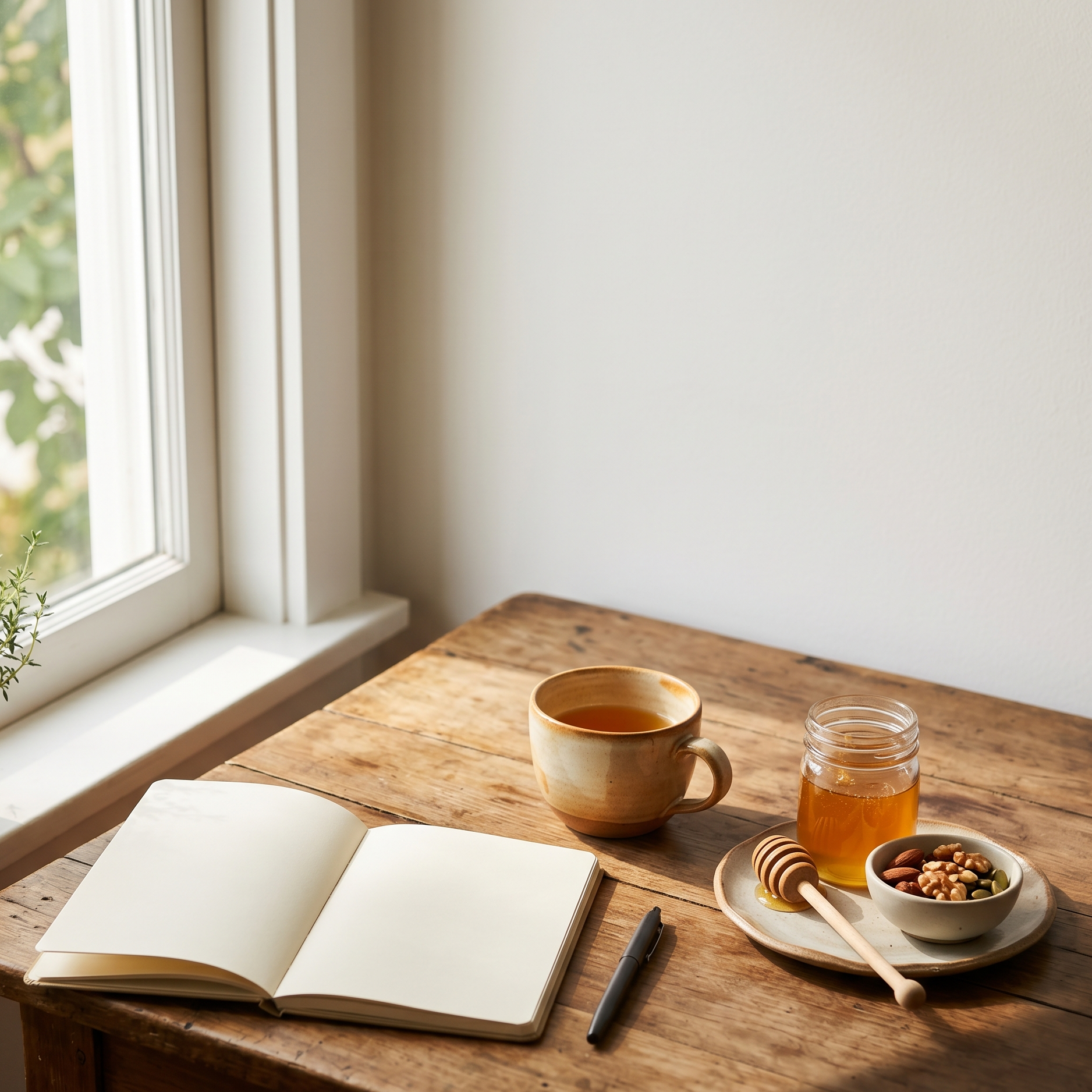
A teaspoon of raw honey, on its own or stirred into warm water or herbal tea, is a much smarter swap. It satisfies the sweetness craving but, being raw and unprocessed, comes with natural enzymes, antioxidants and a lower glycaemic impact than refined sugar. It does not crash you in the same way.
Our Black Seed Infused Raw Honey is one of my favourites for this. You get the sweetness with the added benefits of black seed, which has been studied for its anti-inflammatory and immune-supporting properties through a compound called thymoquinone. If chronic low-grade inflammation is part of what is dragging your energy down over time, having black seed in a daily routine is a small habit with a long-term payoff.
It is not a 3pm energy drink. It is a smarter version of the snack you were going to have anyway.
Pulling it all together
The afternoon slump is rarely about one thing. It is the combination of biology and lifestyle. The biology you cannot change. The lifestyle you can.
Eat a proper lunch. Move after eating. Drink water. Get morning light. Sleep enough at night. Reach for honey, not biscuits. None of this is dramatic. But layered over a few weeks, the difference is significant.
The slump is your body sending feedback. Listen to it, adjust the inputs, and most of it disappears.



Leave a comment
This site is protected by hCaptcha and the hCaptcha Privacy Policy and Terms of Service apply.