Why Your Hair Is Falling Out (And What Actually Helps)
You notice it first in the shower. A handful of strands wrapped around your fingers. Then on your pillow. Then when you brush. The hairline that used to be thicker. The ponytail that used to feel fuller. The realisation that something has shifted.
Hair loss is one of those things that creeps up on you, and when it lands, it hits harder than people expect. It is not just about vanity. Your hair is woven into your identity in ways you do not realise until it starts going. And it is one of the most common, frustrating wellness issues there is, affecting close to half of all men and women by the age of 50.
The good news is that for most people, hair loss is not as fixed as it feels. Once you understand what is actually causing it, there is usually something you can do. Sometimes a lot. Sometimes everything.
Most hair loss is not what you think
When people talk about hair loss, they often jump straight to genetics. Male or female pattern baldness. And while that is the most common type, it is far from the only one. For most people who notice sudden thinning or shedding, the cause is something else entirely.
The single most common form of temporary hair loss is called telogen effluvium. It is what happens when your body goes through a significant stressor, physical or emotional, and a large number of your hair follicles shift into the resting phase at the same time. Two to three months later, that hair falls out in a wave.
The triggers for telogen effluvium include serious illness, major surgery, infections (Covid-19 is a recent and major one), childbirth, sudden weight loss, severe emotional stress, nutritional deficiencies, certain medications and chemotherapy. If you have been through something significant in the last few months and your hair is now thinning, this is almost certainly what is happening.
The reassuring part is that telogen effluvium is usually temporary. The hair grows back. But it can take a long time, and the regrowth often needs support.
The other major causes
Beyond stress and illness, there are a few other patterns worth knowing.
Nutritional deficiencies. Hair is one of the first things to suffer when the body is short on key nutrients. Iron deficiency is one of the most common causes of hair thinning, particularly in women. Low protein intake can trigger shedding because hair is essentially made of protein. Vitamin D, zinc and B-complex vitamins also play roles. If your hair is thinning and you are not sure why, asking your GP for a blood test that includes ferritin, vitamin D, thyroid function and B12 is a sensible starting point.
Hormonal changes. This is huge, especially for women. Pregnancy, postpartum, perimenopause, menopause, PCOS, thyroid imbalances and stopping or starting hormonal contraception can all trigger hair changes. Postpartum hair loss in particular catches many women off guard, usually appearing around three to six months after birth. It is normal, but it can be intense.
Chronic stress. Different from the acute stress that causes telogen effluvium. Long-term, low-grade stress disrupts hormone balance, sleep, digestion and immune function. Over time, all of these affect hair quality and density.
Genetics. Pattern hair loss does have a strong genetic component, particularly in men. But even genetic hair loss is influenced by stress, nutrition, scalp health and topical care. The genes load the gun, but lifestyle pulls the trigger.
Damage and styling. Tight hairstyles, frequent heat styling, harsh chemical treatments and aggressive products can all weaken hair over time. This is one of the easiest causes to address but one of the most common ones.
My own story with this
After I went through chemotherapy, my hair fell out. That part you expect. What I did not expect was how stubborn it would be in growing back. Months passed. Then more months. It came back patchy, thin and slowly. I tried different things, but progress was painfully slow.
Eventually I started working on formulating what would become our Al-Qadeem Beard Oil. I designed it around what I genuinely believed would support hair growth, including black seed oil, castor oil, argan and jojoba. I started using it daily on my beard. And the difference was real. The hair started coming back better. Thicker in places it had been thin. More even than it had been in the months before.
That experience taught me something important. Hair regrowth is not a quick process. It needs nutrition, time, scalp circulation and consistent topical care. There is no one product that does everything. But the right combination, used daily, gives the follicles the best possible environment to do their job.
That is also why we now have a dedicated Nourish Hair & Scalp Elixir specifically designed for hair growth and scalp health, alongside our [Energising Shampoo Bar] for the daily cleansing piece. I will come back to those in a moment.
What the science says about natural hair care
This is one of those areas where traditional practice and modern research have started to genuinely overlap, and it is worth pausing on a few of the ingredients that have real evidence behind them.
Rosemary oil. This one is genuinely remarkable. A 2015 randomised clinical trial published in SKINmed compared rosemary essential oil directly to minoxidil 2%, the standard pharmaceutical treatment for hair loss. After six months, both groups showed similar increases in hair count, but the rosemary group reported significantly less scalp itching. More recent research has continued to support these findings. Rosemary appears to work by improving scalp circulation, prolonging the active growth phase of hair, and reducing scalp inflammation. It is one of the most evidence-backed natural ingredients for hair growth.
Black seed oil. Traditionally used across many cultures for hair and scalp health. The active compound, thymoquinone, has anti-inflammatory and antimicrobial properties. While large clinical trials specifically on hair are still limited, the foundational mechanisms (reducing scalp inflammation, supporting healthy follicle environment) are well-supported.
Castor oil. A traditional staple for hair growth in many cultures, particularly across South Asia. Castor oil is rich in ricinoleic acid which has anti-inflammatory properties and may support scalp circulation. The evidence base is more traditional than clinical, but consistent enough across cultures and centuries to be worth taking seriously.
Amla oil. Used for thousands of years in Ayurvedic medicine for hair strength and scalp health. Amla is high in vitamin C and antioxidants, which support collagen production and may reduce oxidative stress on the hair follicles.
Argan oil. Backed by research for its ability to condition, moisturise and protect hair shafts. It does not stimulate growth in the way rosemary does, but it supports overall hair quality and reduces breakage.
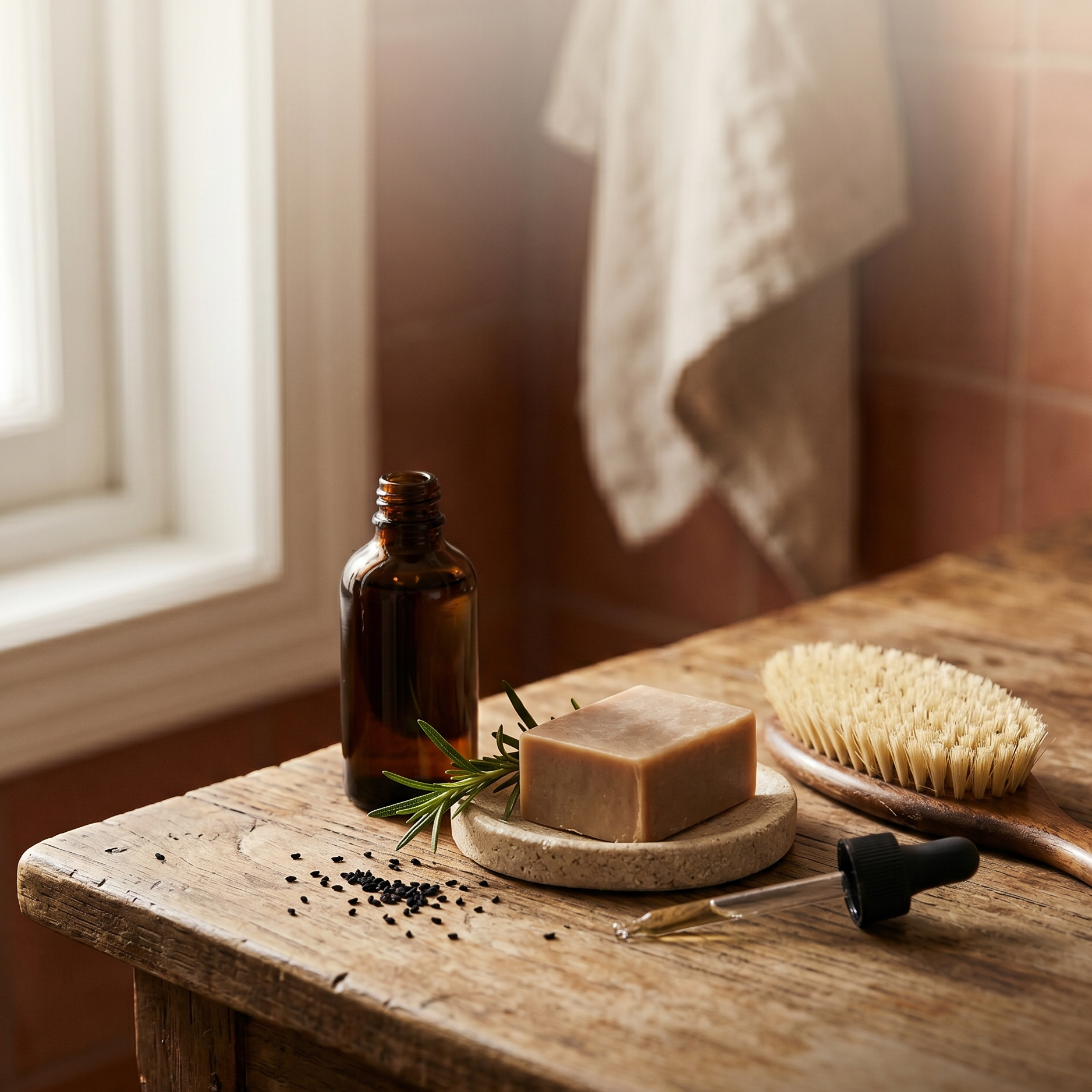
When these ingredients are combined into a daily routine, the results compound over time. This is why our Nourish Hair & Scalp Elixir brings together black seed, castor, amla and argan oils with rosemary, cedarwood and frankincense essential oils. Each one is doing a slightly different job, and together they create the kind of scalp environment that hair follicles actually need to grow well.
The foundations that matter most
Topical treatments help, but they work best on top of solid internal foundations. If you are dealing with hair loss, these are the things to address alongside any oil or product.
Sort out your nutrition. Adequate protein, iron-rich foods, sources of zinc and B vitamins. If you are vegetarian or vegan, pay particular attention to iron, B12 and protein. Sea moss, with its broad mineral profile including iodine, iron, magnesium and zinc, can be a useful gentle support alongside a balanced diet.
Address stress. If telogen effluvium has been triggered by emotional or physical stress, the underlying stress needs attention or the hair issue will keep returning. Prayer, walks, sleep, time off screens, time with people you love. The boring answers are still the right ones.
Protect your sleep. Hair regenerates during sleep. Poor sleep means poor regrowth.
Be gentle with your scalp. Avoid tight hairstyles, excessive heat, harsh chemical treatments. Massage your scalp during your oiling routine. Even a few minutes of scalp massage improves circulation and can support follicle health over time.
Be patient. This is the hardest part. Hair grows at roughly 1cm a month. Visible regrowth from any intervention typically takes three to six months to assess, and often longer. The people who see results are the ones who stick with their routine consistently for at least six months without expecting overnight changes.
A note on what topical oils cannot do
Just to be honest with you. If your hair loss is driven by a major hormonal issue, a thyroid problem, severe nutritional deficiency, an autoimmune condition or significant genetic pattern baldness, no amount of natural oil is going to fix it on its own. In those cases, a proper investigation with your GP or a dermatologist is the right starting point.
What topical oils, scalp care and good nutrition do is create the best possible environment for whatever hair you can grow. They support the follicles, reduce inflammation, improve circulation and protect the hair you have. For telogen effluvium, postpartum shedding, mild thinning from stress, post-illness recovery and general hair quality, they can make a meaningful difference. They are not a miracle. They are the foundation.
Where to start
If your hair has been thinning, do not panic. Start by thinking through what has happened in the last three to six months. Have you been ill? Through major stress? Pregnant or postpartum? On a restrictive diet? Going through hormonal changes? That usually points to the cause.
Then layer in the supports. Eat well. Sleep enough. Manage stress where you can. Add a daily scalp oil routine using genuinely active ingredients. Use a gentle, natural shampoo that does not strip the scalp. Give it time.
Your hair responds to the care you put in. It just runs on its own schedule.



Leave a comment
This site is protected by hCaptcha and the hCaptcha Privacy Policy and Terms of Service apply.