
You're Reaching for the Wrong Vitamin
It usually starts the same way. A scratch at the back of the throat. A head that feels a little heavier than it should. And almost without thinking, you reach for the vitamin C. The orange juice, the fizzy tablets that turn the water cloudy, or that big tub at the back of the cupboard that has been there since last winter.
We all do it. It feels like doing something. It feels sensible.
I want to walk you through what's actually going on when we do that, because the picture is more interesting than the reflex. And by the end I think you will have a clearer idea of what's worth your money this winter and what's not.
Where the reflex came from
The idea that vitamin C fights off colds is not new, and it did not come from nowhere. A lot of it traces back to one very famous scientist, Linus Pauling, who in the 1970s became convinced that large doses could keep colds at bay. He was a brilliant man. He was also, on this particular point, mostly wrong. But the idea was catchy, it fit what people wanted to believe, and it stuck. Fifty years later we are still reaching for the orange juice.
What the evidence actually says
Vitamin C has been studied a lot, which is helpful, because it means we are not guessing.
For most people, taking vitamin C every day does not stop you catching colds. That is the headline that surprises people. The large reviews of the research are clear on it. Where regular vitamin C does seem to help a little is in how long a cold lasts, shortening it by roughly a day in some cases, and it may take the edge off the symptoms. Useful, but hardly the shield we imagine.
Then there's the bit that catches most of us out. Waiting until you already feel a cold coming and then loading up on vitamin C does not reliably do much at all. The modest benefit comes from having decent levels in your system all along, not from a panic dose on day one.
There is one exception worth knowing. In people putting their bodies under extreme physical stress, think marathon runners or soldiers training in freezing conditions, regular vitamin C did cut their chances of catching a cold, and by quite a lot. So it is not useless. It just is not doing much for the average person reaching for it on a normal Tuesday in October.
And the megadose habit? Your body can only use so much. Vitamin C is water soluble, which is a polite way of saying that most of the excess from a big dose leaves your body the next time you go to the toilet. You are, quite literally, paying to make expensive urine. Very high doses can also upset your stomach, so more is not better here.
The vitamin that actually earns its place in a British winter
Here is the part nobody selling you a tub of vitamin C wants to mention. If there is one supplement with a solid case behind it for a UK autumn and winter, it's vitamin D.
The reason is simple. We make vitamin D from sunlight on our skin, and from about October to March in this country the sun sits too low and too weak for our bodies to make enough. It does not matter how many oranges you eat. It is suggested most people consider a daily vitamin D supplement through the darker months for exactly this reason.
So what actually keeps you well?
This is where it gets unglamorous.
Your immune system is not a single button you press with a nutrient. It is the whole of how you live. Sleep is where a lot of the repair happens, and running on five hours for weeks does more damage than any tablet can undo. Stress, left to simmer, quietly wears your defences down. Movement helps things circulate. A varied, colourful diet gives you your vitamin C anyway, alongside zinc, the polyphenols in herbs and spices, and a dozen other things working together in a way no single capsule copies.
None of that fits on a label. None of it comes in a tub with a bright orange lid. But it is the thing that carries you through winter, and it always has been.
There is an old idea in traditional and prophetic wellness that the body is a trust, something you are responsible for looking after steadily, in moderation, rather than neglecting all year and then panicking at the first sign of trouble. Scholars like Ibn al-Qayyim wrote at length about prevention and balance long before anyone had a word like immunity. The framing changes. The wisdom does not. Look after the vessel a little every day and it tends to look after you.
Where a warm cup and a few whole foods fit in
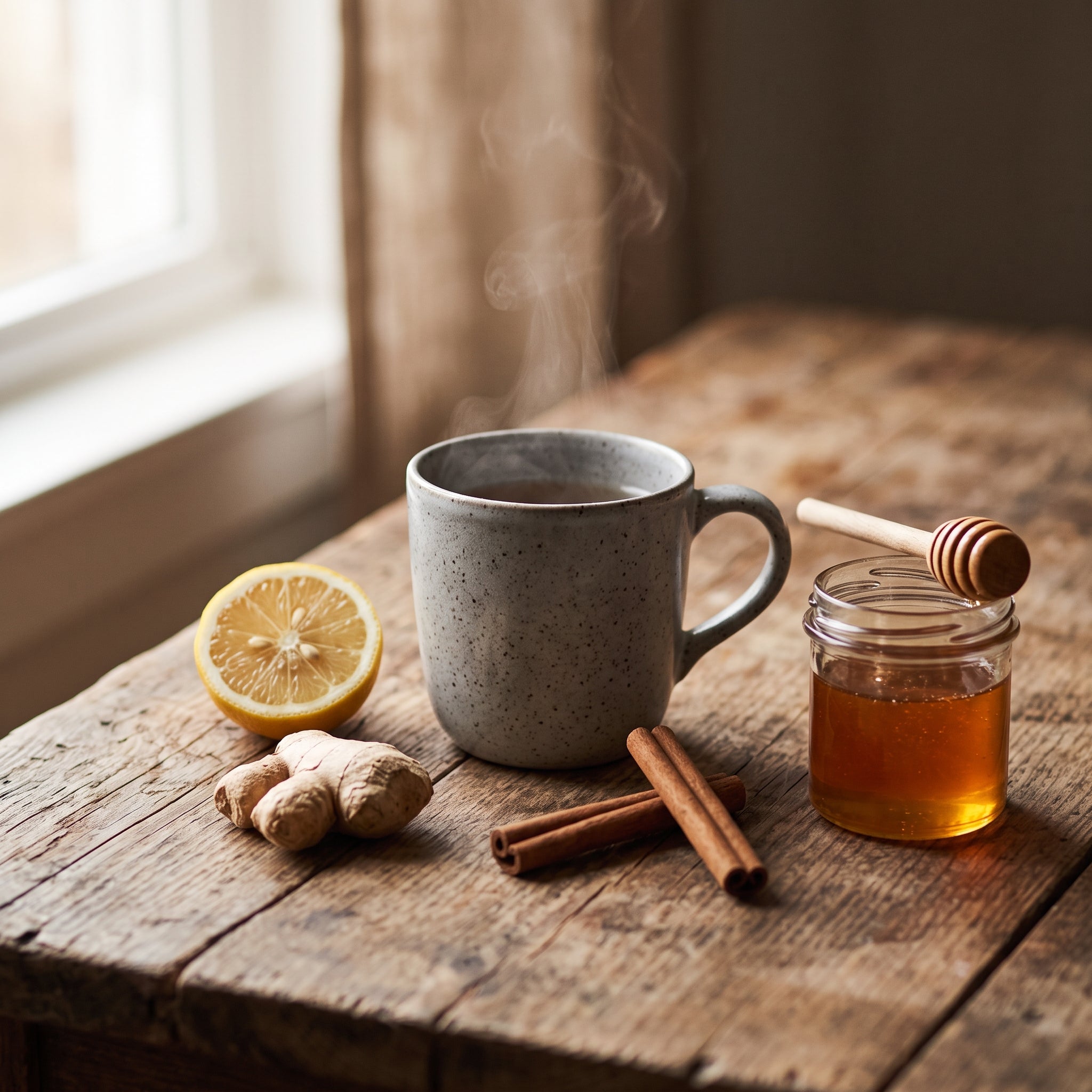
A hot drink isn't a cure. But when the weather turns, there is real comfort in a warming morning cup, and comfort is not nothing when your body is busy fighting something off. My own is ginger, lemon, a little cinnamon, a pinch of cayenne and a good spoon of raw honey once it has cooled a touch. It soothes, it warms, and it gives me a quiet few minutes before the day starts.
Beyond that, the whole foods I keep coming back to are the ones traditionally valued for exactly this season. Sea moss for its broad spread of minerals. Black seed, long treasured in traditional and prophetic wellness, whose active compound thymoquinone is one of the more researched natural anti-inflammatories out there. A warming herbal tea. None of these are magic. They are simply good, honest food that fits a steady daily habit, which is the only thing that has ever really worked.
The short version
The cold coming on is not a punishment, and the orange tablets are not the answer. Get your sleep. Get outside for what daylight there is. Eat well and eat varied. Consider vitamin D through the dark months. And keep something warm and comforting on hand for the mornings your throat feels rough.
The things that actually protect you were never the exciting ones. They were the boring ones, done every day, whether you felt like it or not.



Leave a comment
This site is protected by hCaptcha and the hCaptcha Privacy Policy and Terms of Service apply.