
Why You Feel Better in the Sun (And How to Make the Most of the British Summer)
Have you ever noticed how different you feel on holiday in a hot country? Not just relaxed because you are away from work. Something deeper. More energy. A lighter mood. Better sleep. A sense of wellbeing that seems to arrive within a day or two of landing somewhere sunny.
I notice it every single time. Whenever I travel somewhere hot and sunny, my energy lifts and my mood is noticeably brighter. It is one of the most consistent things I feel, and for a long time I assumed it was just the break from routine. But it is not only that. There is real biology behind it, and understanding it changes how you think about the British summer we are in right now.
Because here is the thing. In the UK, we get a short window each year where the sun can actually do its most important work. And most of us waste it.
The sun does two completely different things for you
When people think about sunlight and health, they usually think of vitamin D. And that is a big part of it. But there are actually two separate processes happening when sunlight hits you, and both matter.
The first is vitamin D production. When ultraviolet B rays, known as UVB, hit your skin, they react with cholesterol in your skin cells to produce vitamin D. Despite the name, vitamin D is actually a hormone, and it influences over a thousand genes in your body. It supports bone health, immune function, muscle strength and mood. It is genuinely one of the most important molecules in human health.
The second process is faster and more immediate. When sunlight enters your eyes, it triggers the release of serotonin in your brain, almost instantly, through a pathway between your retina and your brain. Serotonin is the neurotransmitter most associated with feeling calm, focused and content. This is why a sunny morning can lift your mood within minutes, long before any vitamin D has been made. Your mood is, quite literally, wired to the sun.
So when I feel better in a sunny country, both of these are happening at once. More vitamin D building up in my system over the days, and more serotonin firing every time I am out in the bright light. The energy and the mood lift are not in my head. Well, the serotonin part literally is, but you know what I mean.
Why the British summer matters so much
Here is the part most people do not realise. In the UK, your skin can only produce vitamin D for part of the year.
Between roughly October and March, the sun never climbs high enough in the sky for the UVB rays to reach us at the right angle. The atmosphere filters them out. This means that for around half the year, no matter how much time you spend outside, your skin makes virtually no vitamin D. The NHS itself states that most people in the UK get little to no vitamin D from sunlight during these months.
Which leads to a simple but important conclusion. The spring and summer months are when you build your vitamin D stores. This is the window. Right now. The sunlight you get on your skin over these months is what carries you, at least partly, through the darker half of the year.
If you spend the whole British summer indoors, covered up, or permanently behind glass, you arrive at winter with very little in the tank. And that is when the low energy, the dips in mood, and the seasonal slump tend to set in.
How to actually make vitamin D from the summer sun
A few practical things make a real difference here.
Timing matters. The best time for vitamin D production is the middle of the day, roughly between 11am and 3pm, when the sun is at its highest and the UVB rays are strongest. This is the opposite of most sun advice, but for vitamin D specifically, midday is when your skin works most efficiently. You need less time in the sun to make what you need.
Use the shadow test. Here is a simple trick. If your shadow is shorter than your actual height, the sun is high enough for your skin to make vitamin D. If your shadow is longer than you, the angle is too low and little to no vitamin D is being produced. It is a surprisingly handy rule of thumb.
You need skin exposed. Vitamin D is made through bare skin, not through clothing or glass. Sitting by a sunny window will lift your mood through the light, but it will not make vitamin D, because standard glass blocks UVB. To actually produce it, you need some bare skin, like your forearms, lower legs or face, exposed to direct sun.
It does not take long. For most people with lighter skin, around 15 to 30 minutes of midday summer sun on bare skin a few times a week is enough. People with darker skin have more melanin, which is protective but also slows vitamin D production, so they may need considerably longer to make the same amount. This is an important point, and it is one reason vitamin D deficiency is more common among people of South Asian, African and Middle Eastern heritage living in the UK.
Balance is everything. None of this means baking in the sun until you burn. Sunburn is genuinely harmful and increases skin cancer risk. The goal is regular, moderate exposure, getting out in the sun before your skin shows any sign of going pink, and covering up or seeking shade after that. Short and regular beats long and burnt, every time.
The mood side: get your light early too
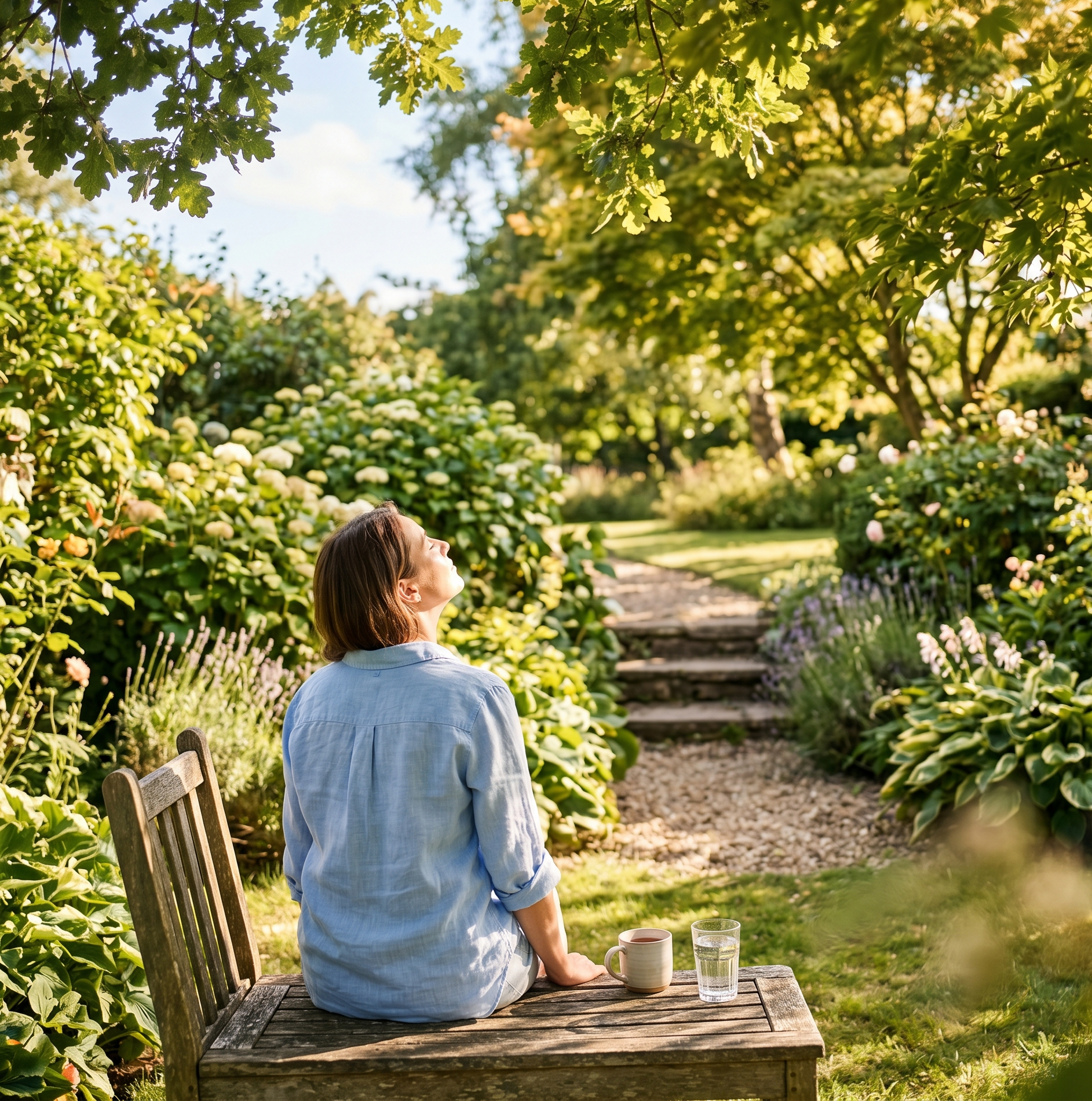
While midday sun is best for vitamin D, morning light is brilliant for your body clock and mood. Getting outside in natural light within the first hour or two of waking helps anchor your circadian rhythm, which improves your energy during the day and your sleep at night. It also gives you that early serotonin boost to start the day well.
So ideally you get both. Morning light for your rhythm and mood. Midday sun, in moderation, for your vitamin D. Even ten or fifteen minutes of each makes a genuine difference.
A faith reflection
There is something worth pausing on here. The rhythm of the sun has been central to human life, and to worship, for as long as we have existed. In Islam, the daily prayers are timed by the position of the sun. Fajr at dawn. Dhuhr after the sun passes its peak. Asr in the afternoon. Maghrib at sunset. Isha at night.
Built into that structure is a natural pull to be aware of the sun's movement through the day, to pause and mark its rhythm. There is a quiet wisdom in a way of life that keeps you connected to the cycle of light, when so much of modern living disconnects us from it entirely. We spend, on average, the overwhelming majority of our lives indoors. Our ancestors lived under an open sky. Something in us still responds to that light the way it always has.
When sun is not enough
For all the talk of summer sun, the honest reality is that many people in the UK, especially those with darker skin, older adults, people who cover for cultural or religious reasons, and anyone who spends most of their time indoors, will struggle to make enough vitamin D from sunlight alone even in summer. And in winter, almost nobody makes enough.
This is why UK government guidance recommends that everyone considers a vitamin D supplement during the autumn and winter months, and that people in higher-risk groups consider it year-round. It is one of the few supplements with genuinely strong, broad evidence behind it. If you are not getting much sun, it is worth looking into, and a simple blood test through your GP can tell you where your levels stand.
Good nutrition supports the picture too. While few foods contain much vitamin D, a nutrient-dense diet supports your body's ability to use it and supports your mood and energy more broadly. Mineral-rich foods, oily fish, eggs, and broad-spectrum support like sea moss all play a part in the wider foundation.
Make the most of it
We are in the middle of the short window where the British sun can actually do its most important work. Do not waste it behind a screen.
Get outside. Eat your lunch in the garden or the park. Take a midday walk with your sleeves rolled up. Get your kids out in it. Let the morning light hit your eyes before you reach for your phone. Build your stores now, while the sun is high enough to help you, so that when winter comes you are starting from a stronger place.
The sun is one of the oldest medicines there is. For these few months, it is freely available. Use it well.


Leave a comment
This site is protected by hCaptcha and the hCaptcha Privacy Policy and Terms of Service apply.