Children and Sugar: Surviving the Summer of Ice Creams, Parties and Treats
It is the summer holidays, which means one thing for most parents. Sugar. Everywhere. Ice cream vans, birthday parties, days out, ice lollies in the garden, grandparents who see it as their sacred duty to hand over sweets the moment they walk through the door. If you have kids, you know exactly what I mean.
And if you are anything like most parents, you feel a low-level guilt about it. Am I letting them have too much? Am I being too strict? Is a bit of sugar in summer really that bad?
Let me try to give you an honest, useful answer that does not involve either wrapping your children in cotton wool or pretending sugar does not matter. Because the truth sits somewhere sensible in the middle.
How much sugar are children actually supposed to have?
The official UK guidance is more specific than most people realise. The recommendation is that free sugars, meaning added sugars plus those in honey, syrups and fruit juice, should make up no more than 5% of daily calories. In practical terms, that works out as:
No more than 19g of free sugars a day for children aged 4 to 6. That is about 5 sugar cubes.
No more than 24g a day for children aged 7 to 10. That is about 6 sugar cubes.
For younger children under 4, there is no strict limit given, but the advice is to avoid sugary foods and drinks as much as possible.
Now here is the reality. UK children currently get around 13% of their calories from sugar, which is more than double the recommendation. For teenagers it is closer to three times. To put it in perspective, a single can of fizzy drink can contain around 9 teaspoons of sugar, which already exceeds a young child's entire daily allowance in one go.
I am not telling you this to make you feel bad. I am telling you because most parents genuinely do not know how low the recommended amount is, or how quickly everyday foods blow past it.
Why it actually matters
It is worth being clear about why this is not just fussiness.
Teeth. Sugar is the leading cause of tooth decay in children, and tooth extraction is one of the most common reasons children in the UK are admitted to hospital. It is frequency as much as quantity. Sipping sugary drinks throughout the day bathes the teeth in sugar constantly, which is worse than having something sweet in one sitting.
Energy and behaviour. Sugary foods spike blood sugar quickly and then drop it just as fast. That crash often shows up as irritability, tiredness and difficulty concentrating. Many parents describe their children as "bouncing off the walls then melting down," and blood sugar swings are often part of that picture.
Appetite and habits. Sugar is not very filling, so it displaces more nourishing food. A child full of sweets is not hungry for the meal that would actually feed them. And crucially, taste preferences are being formed in childhood. The more sugar a child is used to, the more they come to expect and crave.
Long-term health. Over a third of children in the UK are overweight or obese by the time they leave primary school, which raises the risk of type 2 diabetes and other health problems later in life. Childhood habits genuinely do set the trajectory.
The trap most parents fall into
Here is where I want to be balanced, because the biggest mistake is not letting your kids have sugar. It is going to war with it.
When sugar becomes forbidden, it becomes fascinating. Children who are never allowed any treats often develop an intense preoccupation with them, and tend to overeat them the moment they are out of a parent's sight. The research on restriction is fairly consistent. Heavy-handed control around food tends to backfire.
So the goal is not zero sugar. The goal is a healthy, relaxed relationship with it, where treats are treats, not daily defaults, and where the everyday diet is solid enough that the occasional ice cream is genuinely no problem at all.
What actually works
These are the approaches I have found genuinely help, both from the research and as a parent myself.
Focus on the everyday, relax about the occasional. If the daily diet is built on real food, then birthday cake at a party is completely fine. It is what happens most days that matters, not what happens at the occasional celebration. Aim to get the baseline right and stop sweating the exceptions.
Tackle drinks first. Sugary drinks are the single biggest source of free sugars for children and the easiest win. Water and milk as the defaults. Keep fizzy drinks, squash and even fruit juice as occasional rather than everyday. If your child drinks a lot of juice, dilute it heavily and work towards water. This one change alone makes an enormous difference.
Do not ban, structure. Rather than forbidding sweets, give them a place. A treat after a meal rather than on an empty stomach, which also blunts the blood sugar spike. A relaxed approach at a party. This teaches moderation rather than creating a forbidden-fruit obsession.
Watch the hidden sugars. The sugar in obvious treats is not really the problem, because you can see it. The bigger issue is the hidden sugar in things marketed as healthy: flavoured yoghurts, cereal bars, breakfast cereals, smoothies, shop-bought sauces. Get in the habit of glancing at the "of which sugars" line on labels. You will be surprised.
Get them involved. Children who help prepare food develop a better relationship with it. Let them help make a fruit-based pudding, or bake something at home where you control what goes in. Home baking still contains sugar, but far less than shop versions, and the process itself is valuable.
Lead by example. Children copy what they see far more than what they are told. If the adults in the house are constantly drinking fizzy drinks and snacking on sweets, no amount of rule-setting will land. The household habits shape the child's habits.
A better kind of sweet
Now, honesty time, because I sell honey and I am not going to pretend otherwise. Honey is technically a free sugar. The NHS counts it as one, and it should not be given to babies under one year old at all, due to the risk of infant botulism.
So I am not going to tell you honey is a health food you can pour on everything. That would not be true.
What I will say is this. When your child wants something sweet, raw honey is a genuinely better choice than refined white sugar or processed syrups. It is sweeter than sugar, so you need less of it. It comes with natural enzymes, antioxidants and trace nutrients that refined sugar simply does not have. And it has a lower glycaemic impact, meaning a gentler rise and fall in blood sugar than pure sugar.
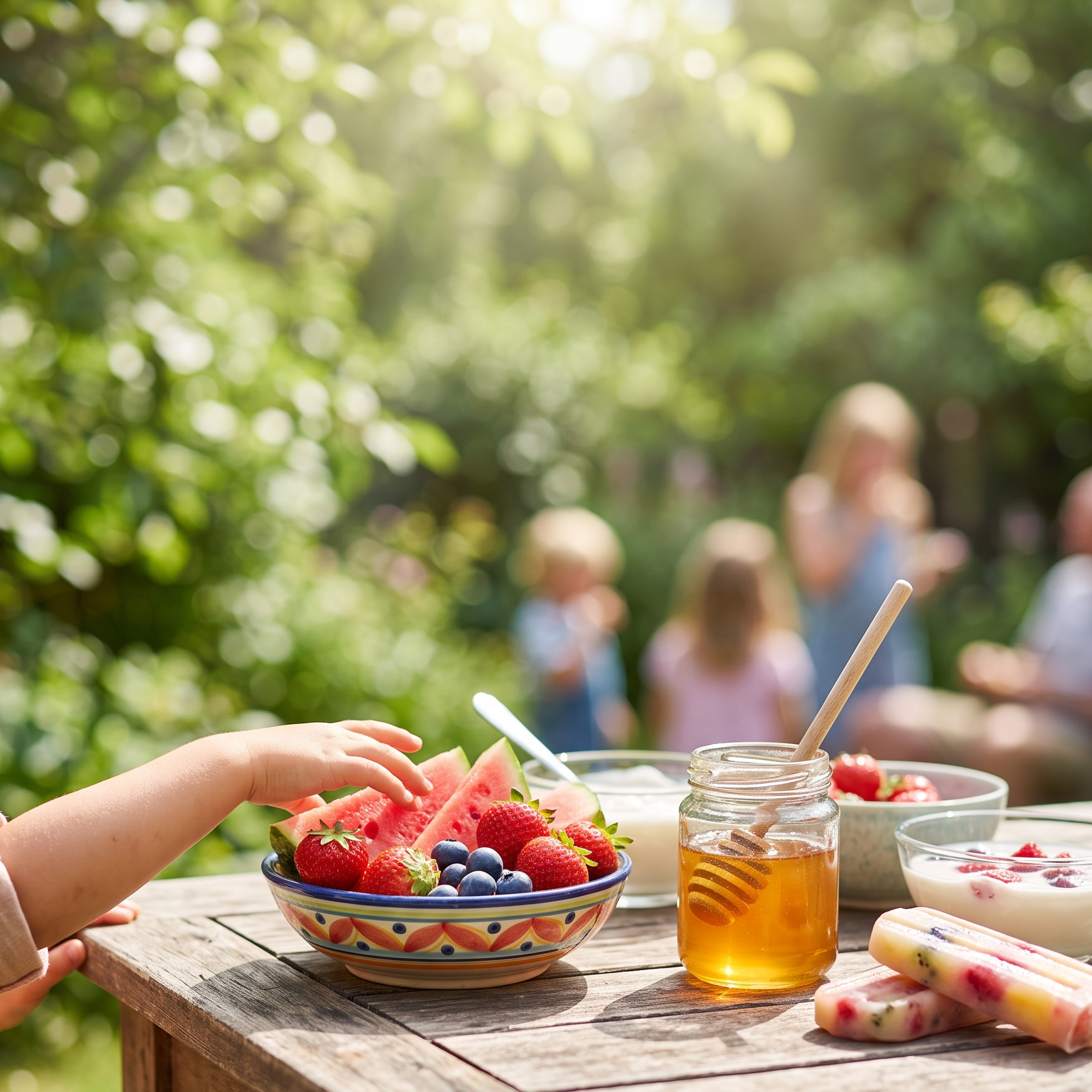
Used thoughtfully and in moderation, it is a good bridge. A little raw honey drizzled on natural yoghurt with berries instead of a sugary flavoured yoghurt. A spoonful stirred into porridge instead of sugar. Honey on toast instead of chocolate spread. These are not sugar-free, but they are genuine upgrades, and they help shift a child's palate towards more natural sources of sweetness.
The point is not to swap one sweet habit for another. It is to build a diet where the sweetness comes, as much as possible, from whole foods like fruit, with better options like raw honey filling the gap when something sweeter is wanted.
The bigger picture
Do not aim for perfection this summer. Aim for balance.
Let them have the ice cream at the beach. Let them enjoy the party. Those moments are part of a happy childhood and there is barakah in joy and togetherness. But build the everyday around real food, keep the drinks clean, do not turn sugar into forbidden treasure, and lead by example.
Get those foundations right, and a summer full of the occasional treat will not do your children any harm at all. It is the daily habits, not the happy exceptions, that shape their health for life.


Leave a comment
This site is protected by hCaptcha and the hCaptcha Privacy Policy and Terms of Service apply.