Why We Sleep Worse in Summer (And What Actually Helps)
You would think the season of longer days, warmth and holidays would be when we sleep best. In reality, for a lot of people, summer is when sleep falls apart. You lie there too hot to drift off, the room still faintly light at 10pm, and then the birds start up and the sun blasts through the curtains at half four in the morning. By July, plenty of people are quietly exhausted.
I am one of them, if I am honest. I find summer sleep genuinely harder, and some weeks the only thing that saves me is a short nap in the day when I can grab one. So this is not me lecturing from a position of eight perfect hours a night. This is me working through what actually helps, because I need it as much as anyone.
Here is what is going on, and what genuinely makes a difference.
Your body needs to cool down to sleep, and summer fights that
One of the most important things to understand about sleep is that your core body temperature needs to drop in order for you to fall and stay asleep. As bedtime approaches, your body naturally begins to cool itself, and that drop is part of the signal that tells your brain it is time to rest.
In hot weather, that cooling process becomes much harder. When the air around you is warm, your body cannot shed heat as easily, so it struggles to reach the temperature it needs for deep sleep. This is why you toss and turn on hot nights, wake up sweaty, and never seem to drop into the properly restorative stages of sleep. The ideal bedroom temperature for sleep is genuinely quite cool, around 16 to 18°C, which is a long way from a stuffy British bedroom in a July heatwave.
Longer days confuse your body clock
The second big factor is light. Your sleep is governed by your circadian rhythm, your internal body clock, and the single most powerful signal it responds to is light.
When it gets dark, your brain releases melatonin, the hormone that makes you feel sleepy. When it is light, melatonin production is suppressed. In summer, with daylight stretching to 16 or 17 hours, your melatonin release gets pushed later and later. Research shows it can shift by anywhere from 30 minutes to an hour compared to winter. So even if you go to bed at your usual time, your body simply does not feel sleepy yet.
Then, at the other end of the night, the sun rises early and floods the room with light, which shuts off melatonin and wakes you before you are ready. You get squeezed at both ends: falling asleep later, waking up earlier. Less sleep overall, even though your need for it has not changed one bit.
The summer lifestyle piles on
On top of the biology, summer brings a set of habits that quietly wreck sleep further.
We stay up later because it is light and it feels wrong to go to bed. We socialise more. We eat later in the evening. We tend to drink more alcohol, which might help you fall asleep but badly disrupts the quality of it, especially in the second half of the night. And we sweat more during the day, which can leave us dehydrated. Dehydration matters more than people think here, because your body needs certain amino acids to produce melatonin, and being low on fluids interferes with that whole process.
None of these are dramatic on their own. Stacked together, across weeks, they add up to the summer sleep slump so many people feel.
What actually helps
The good news is that summer sleep responds well to a few deliberate changes. Here is what genuinely works.
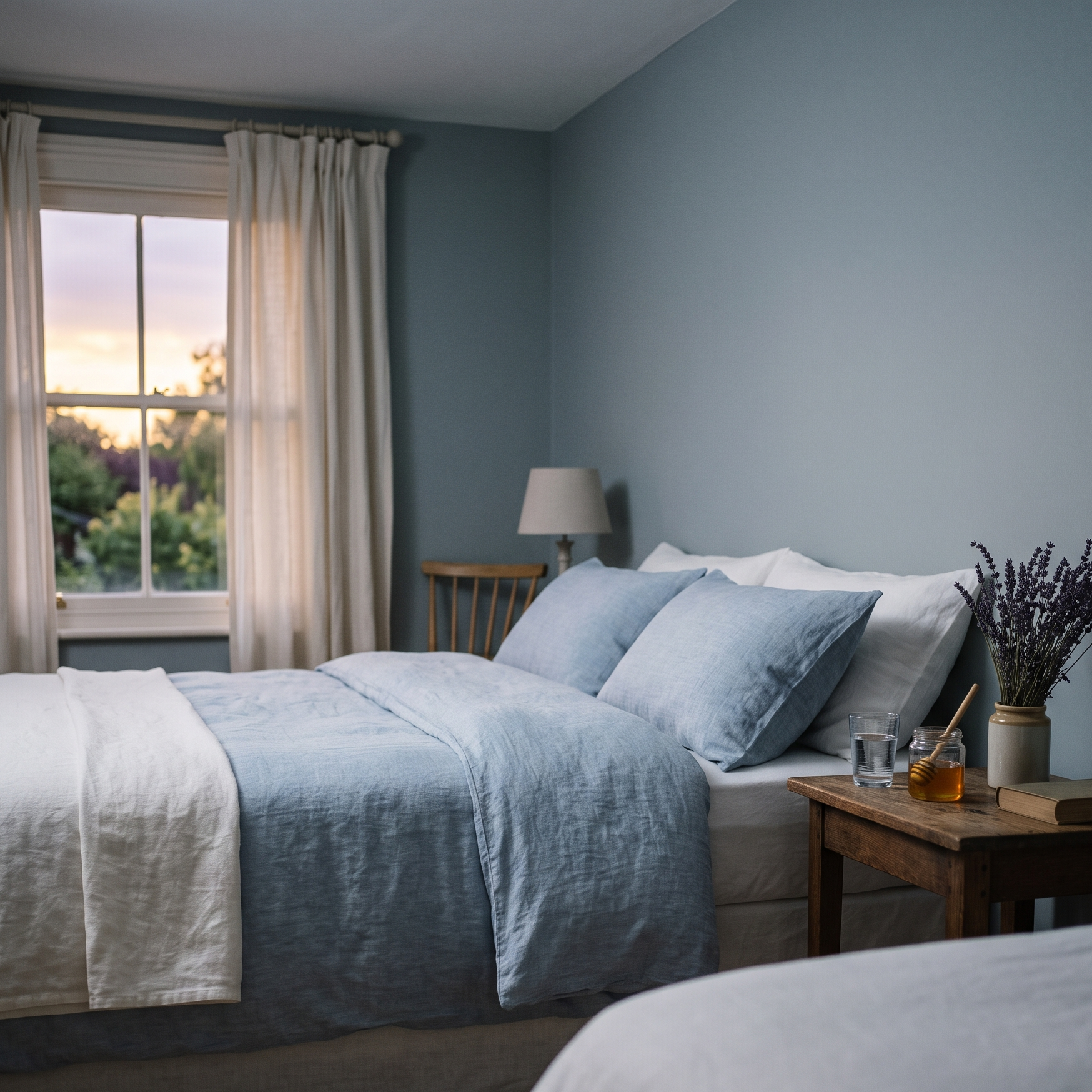
Cool the room down before bed, not just at bedtime. Keep curtains and windows closed during the hottest part of the day to keep heat out, then open them in the evening once it cools. A fan helps, both by moving air and by providing a bit of white noise. Some people put a bowl of ice water in front of the fan for extra cooling.
Create artificial darkness. This is one of the most effective changes you can make. Blackout curtains or a good eye mask block both the late sunset and the early dawn, which protects your melatonin at both ends of the night. If you wake at 4:30am every summer, this alone can be transformative.
Dim the lights a couple of hours before bed. Since evening light is what delays your melatonin, creating your own dusk indoors helps enormously. Turn off bright overhead lights, use lamps, and get off bright screens at least an hour before bed. You are essentially telling your body that night is coming, even while it is still light outside.
Get morning light early. It sounds counterintuitive when the problem is too much light, but getting outside within an hour of waking actually helps anchor your body clock so that it winds down earlier in the evening. Morning light and evening darkness work as a pair.
Have a cool shower before bed. A lukewarm or cool shower before bed helps bring your core temperature down and makes falling asleep easier. Counterintuitively, even a warm shower can work, because it draws blood to the skin's surface and helps your body shed heat afterwards.
Watch the evening habits. Try to keep your bedtime roughly consistent even when it is light. Go easy on late heavy meals and alcohol. And keep your water intake up through the day so you are not going to bed dehydrated.
Light bedding, natural fabrics. Cotton and linen breathe far better than synthetic materials, which trap heat. Lighter bedding makes a real difference to how hot you get in the night.
The daytime nap: my personal saviour
I mentioned I struggle with summer sleep, and the single thing that helps me most when a night has been poor is a short nap during the day. And there is genuine wisdom in this, not just personal preference.
A short nap of around 10 to 20 minutes can be remarkably restorative. The key is to keep it short. Longer than about 30 minutes and you risk dropping into deep sleep, which leaves you groggy and can interfere with that night's sleep. But a brief nap, ideally in the earlier afternoon, can take the edge off a bad night without disrupting the next one.
There is a beautiful tradition here too. The daytime rest, known as qaylulah, is part of the Sunnah. The Prophet ﷺ is reported to have taken a short midday rest, and it has long been recommended as a healthy practice in Islamic tradition. Many cultures across the warmer parts of the world built a midday rest into daily life for exactly this reason. When the heat peaks and sleep at night is harder, a short pause in the day is not laziness. It is wisdom that we in the modern West have largely forgotten.
A little natural support
Alongside the practical changes, a calming evening routine genuinely helps signal to the body that it is time to wind down, even on a warm, light evening.
This is where a simple ritual comes in. A warm, calming drink before bed, some quiet, dimmed lights. Lavender in particular has a long traditional association with rest and relaxation, used for generations to soothe the nervous system and ease the body towards sleep. A small spoon of lavender honey in a cup of warm water or herbal tea in the evening is a gentle, pleasant way to build that wind-down ritual, and the act of the ritual itself is part of what helps.
Magnesium is another one worth knowing about, as it supports muscle relaxation and the calming side of the nervous system. Applied as a spray to the legs or shoulders before bed, or taken through mineral-rich foods, it can be a useful part of an evening routine, especially in summer when we sweat more and lose minerals.
The bigger picture
Summer sleep is genuinely harder, and it is not your imagination or a lack of discipline. Your biology is working against you: the heat, the light, and the lifestyle all conspire to shorten and disrupt your rest.
But you are not powerless. Cool the room, block the light, protect your evenings, keep your rhythm as steady as you can, and do not be too proud to take a short nap when you need one. Build a calm wind-down ritual and lean on it.
Do that, and even in the height of summer, you can sleep far better than the season would otherwise allow. And if all else fails, there is no shame in a twenty-minute nap in the afternoon. You would be in very good company.



Leave a comment
This site is protected by hCaptcha and the hCaptcha Privacy Policy and Terms of Service apply.