
Tired, Headachy and Snacking All Day? It Might Just Be Water
A few years ago, back when I was coaching clients one to one, someone came to me with a familiar list. Constant fatigue. Poor sleep. Dry skin. Regular headaches. Trouble concentrating in the afternoons. They were braced for a complete life overhaul. New diet, training plan, supplement stack, the lot.
I looked at what they had told me about their daily routine and noticed something simple. They barely drank any water. Tea, coffee, the odd soft drink, but almost no actual water.
So I gave them their first two weeks of coaching: drink enough water. That was it. Nothing else changes yet.
They were surprised. A bit deflated, honestly. They were paying for coaching and the big plan was... water? But they went with it. And at the one week check-in, they were already telling me how much better they felt. The headaches had eased. Energy was up. Several of the things they had come to me about had visibly improved. From water.
I have thought about that client a lot since, because it taught me something I keep coming back to. The most powerful health changes are often the least glamorous ones. And in summer especially, mild dehydration is quietly behind more symptoms than almost anything else.
Why mild dehydration matters more than you think
Your body is roughly 60% water. Your brain, your blood, your joints, your skin, your digestion, every system runs on it. And the surprising part is how little you need to lose before things start going wrong.
Research from the University of Connecticut's Human Performance Laboratory found that mild dehydration, just 1.4% of body mass, was enough to cause fatigue, headaches, difficulty concentrating and noticeable drops in mood. That is not someone stranded in a desert. That is an ordinary person on an ordinary day who has not drunk enough. In the studies, it did not even matter whether people were exercising or sitting at rest. The effects were the same.
The tricky part is that thirst is a late signal. By the time you actually feel thirsty, you are usually already mildly dehydrated. Which means a lot of people spend most of their day in that zone without ever connecting it to how they feel. They blame poor sleep, stress, age, their diet. Sometimes those are factors too. But often, the first and cheapest fix is sitting in the tap.
The symptoms hiding in plain sight
Mild, ongoing dehydration shows up as things people rarely attribute to water:
Afternoon fatigue. Blood volume drops slightly when you are dehydrated, which means your heart works harder to deliver oxygen and nutrients. The result is that heavy, sluggish feeling that no amount of coffee fixes. In fact coffee, being mildly diuretic in larger amounts, can quietly make it worse.
Headaches. One of the most common triggers for everyday headaches is simply not drinking enough. Many people who get regular low-grade headaches notice them reduce dramatically when they fix their water intake.
Cravings and snacking. The body's thirst and hunger signals are easily confused. If you find yourself picking at food all day, especially in warm weather, there is a reasonable chance some of that is thirst wearing a disguise.
Dry skin and dull complexion. Your skin is your largest organ and one of the last in line for water when supplies run low. Chronic mild dehydration shows up as dryness, dullness and more visible fine lines.
Poor concentration and low mood. The UConn research found concentration and mood were among the first things to suffer, particularly in women. Tasks literally feel harder when you are mildly dehydrated.
Constipation and sluggish digestion. Your gut needs water to move things along. It is one of the simplest explanations for digestive sluggishness and one of the most overlooked.
Why summer quietly raises the stakes
In warm weather you lose noticeably more water through sweat, even when you do not feel sweaty. Sitting in a warm office, walking in the sun, sleeping in a hot bedroom. The losses add up, and most people do not increase their intake to match. This is why so many people feel inexplicably more tired, headachy and irritable through the warmer months. It is not the heat itself. It is the slow, unnoticed dehydration that comes with it.
How much do you actually need?
The general guidance for UK adults is around 2 to 2.5 litres of fluid a day, more in hot weather or if you are active. But rather than obsessing over an exact number, the more useful check is your urine. Pale straw colour means you are well hydrated. Darker yellow means you are behind and need to catch up.
A few practical habits make this easy:
Front-load your day. A large glass of water first thing in the morning, before tea or coffee, replaces what you lost overnight and starts the day on the right foot.
Anchor water to existing habits. A glass before each meal. A glass after each prayer. A bottle on your desk that gets refilled at set points. Hydration works best when it is attached to things you already do, not left to memory.
Make it something you enjoy. This matters more than people admit. If plain water bores you, you will not drink it. Warm or cold water with lemon, herbal teas, water infused with mint or cucumber. It all counts.
Eat your water too. Cucumber, watermelon, tomatoes, oranges, courgettes. Water-rich foods contribute meaningfully to your intake, and they come with minerals and fibre attached.
Do not forget minerals. When you sweat, you lose more than water. Sodium, potassium and magnesium go with it. This is where most people reach for bright blue sports drinks, which are mostly sugar and colouring. Real food does the job better. A pinch of good salt in your water, mineral-rich foods, or something like sea moss, which carries a broad spectrum of the minerals your body actually uses.
The drink I keep coming back to
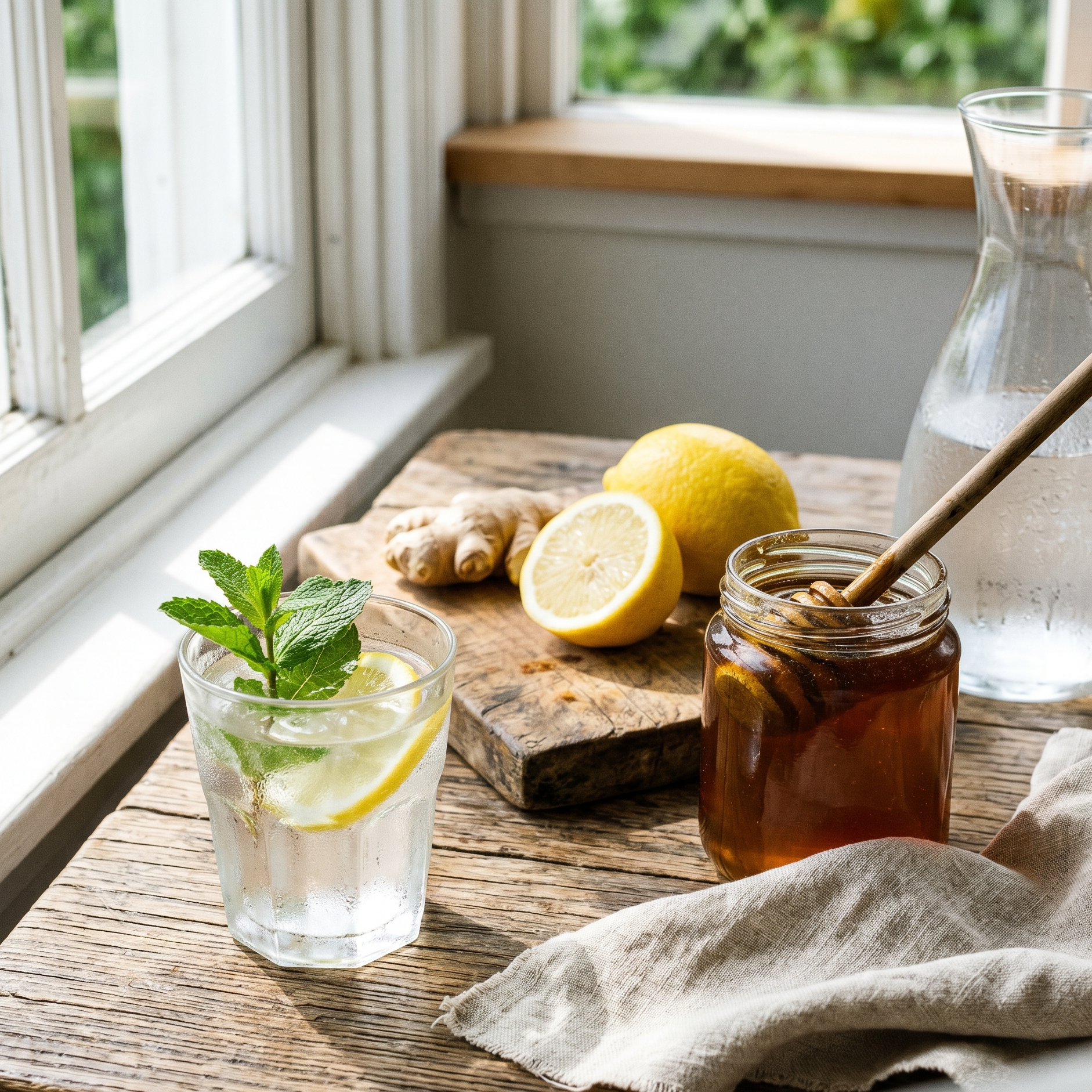
If there is one upgrade I would suggest to anyone trying to drink more, it is this. A glass of warm or cold water with a spoonful of our Ginger and Lemon Raw Honey stirred in.
It works on several levels. The flavour makes water something you look forward to rather than a chore, which means you actually drink it. The raw honey gives gentle natural sweetness with enzymes and antioxidants instead of the refined sugar you would get in a shop-bought drink. Ginger has a long tradition of supporting digestion, and lemon adds a fresh lift along with a little vitamin C. In summer, cold with ice, it makes a genuinely good alternative to fizzy drinks and cordials, especially for kids. In the morning, warm, it is one of the simplest and most pleasant ways to start the day hydrated.
It is not complicated. That is rather the point.
The boring truth
We are drawn to complicated answers because they feel more serious. A new supplement stack feels like progress. Drinking more water feels too simple to matter.
But my client's story is not unusual. I have seen the same pattern many times. Fatigue, headaches, dull skin, poor focus, and underneath it all, a body running consistently short on the one thing it needs most. Two weeks of proper hydration will tell you more about what your body actually needs than most tests will.
Start there. Before the supplements, before the protocols, before anything clever. Water first. It is the cheapest experiment in health, and it pays out more often than anything else I know.


Leave a comment
This site is protected by hCaptcha and the hCaptcha Privacy Policy and Terms of Service apply.