
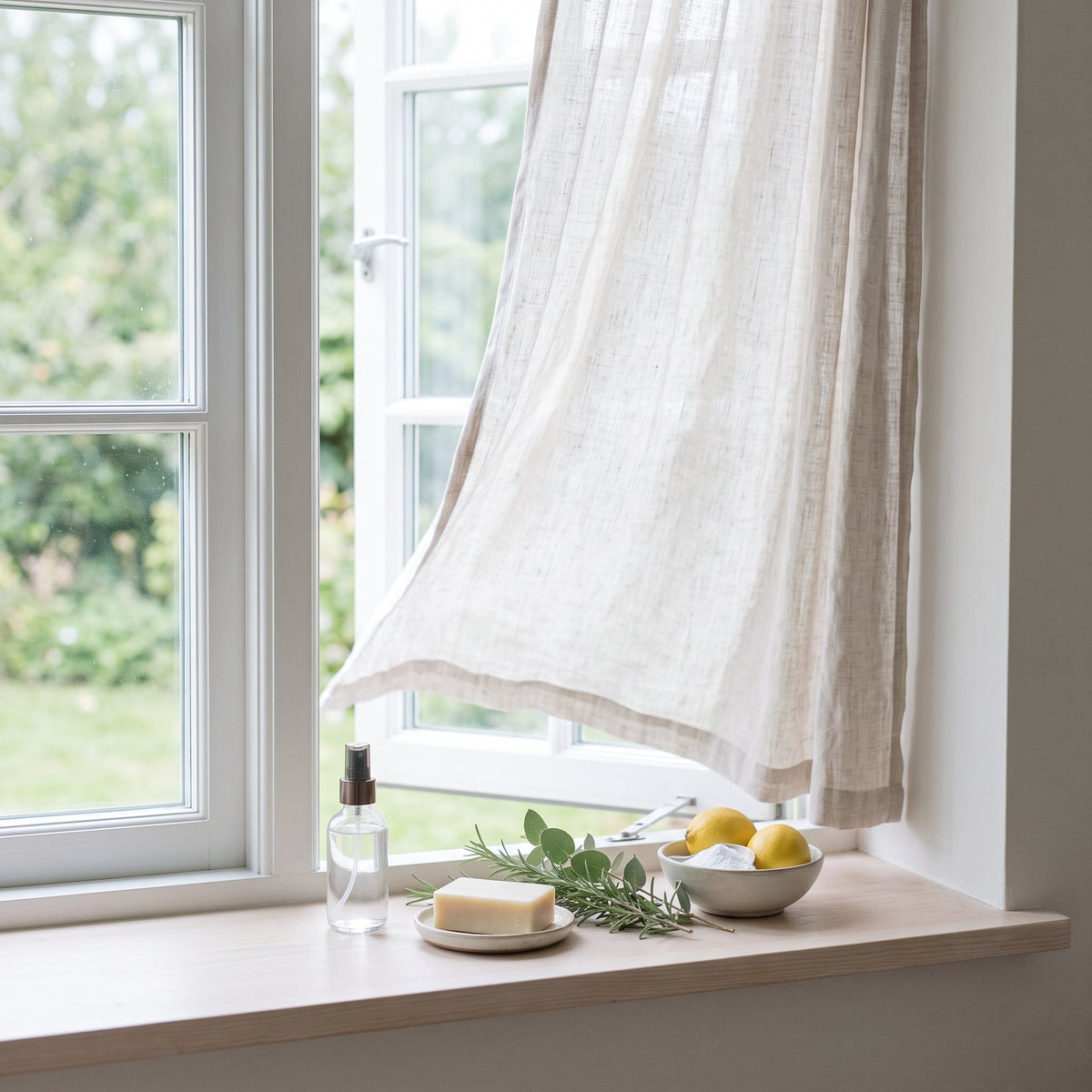
What You Put on Your Body Every Day Without Thinking
Count the products you'll put on your body before you leave the house today. Deodorant. Maybe an antiperspirant. A spray of perfume or aftershave. Moisturiser, shower gel, shampoo, a bit of hairspray. Then the home around you: the cleaning spray, the laundry fragrance, the plug-in freshener quietly puffing scent into the air all day.
Now add it up over a lifetime. Every day, for decades, layered one on top of another. Most of us have never once stopped to read what's actually in any of it. And when you do start reading, a fair question creeps in. Do we actually know this is safe?
The honest answer, for a lot of it, is that we don't.
The sentence that changed how I think about this
When you look into the chemicals in everyday products, you keep meeting the same reassurance: "there's no evidence this causes harm." It sounds comforting. But sit with it for a second, because it rarely means what people think it means.
"No evidence of harm" usually does not mean scientists studied something for forty years and it came back clean. It much more often means nobody has done that study at all. Absence of evidence is not evidence of absence, and once you notice the difference you can't unsee it.
Think about what a proper study would even have to prove. Not whether one spray on one morning hurts you, but whether a lifetime of deodorant, perfume, scented lotion, laundry fragrance, cleaning spray and air freshener, all absorbed and inhaled together, day after day for decades, adds up to something. That study is almost impossible to run cleanly, so for most of these products it simply has not been done. We are, in a real sense, the long-term trial.
The one people ask me about most: aluminium
Take the common example, the aluminium in most antiperspirants.
First, honestly. The big cancer organisations say there is no conclusive proof that antiperspirants cause breast cancer, and I won't tell you otherwise. If you've used one for years, please don't panic over it.
But notice how much work "no conclusive proof" is doing in that sentence. Here's what we actually know. Antiperspirants use aluminium salts to plug your sweat ducts, which is how they stop you sweating. Some of that aluminium is absorbed through the skin. And there's an ongoing line of research, led by scientists like Dr Philippa Darbre, into whether aluminium can act like a weak oestrogen in the body and interfere with hormone signalling in breast tissue. Aluminium has been measured in breast tissue, and in lab studies it has shown effects on breast cells. That work is not proven in humans and it's debated. But it's real, it's serious, and it is not resolved.
So you have genuine open questions on one side, and "no conclusive proof" on the other, which really just means the long-term human answer isn't in yet. Faced with that, my own view is simple. You're applying a metal salt to thin skin, right next to lymph nodes and breast tissue, every single day for life, in order to block a natural process your body does for a reason. When a perfectly good alternative exists, why carry the uncertainty at all?
Which brings up a distinction worth knowing. An antiperspirant stops you sweating. A deodorant just tackles the smell. Sweat itself is basically odourless, the smell comes from bacteria feeding on it, so a natural deodorant handles the actual cause while letting your body sweat as it's meant to. You lose nothing by switching.
It isn't just aluminium, and it isn't just cancer
The bigger picture is about the whole load, and about more than one illness.
Take the word "fragrance" or "parfum" on a label. It's a legal loophole that can stand in for dozens of unlisted ingredients, often including a group called phthalates. When scientists test people's urine, they find phthalates in the overwhelming majority of us. We are measurably carrying this stuff around. And phthalates belong to a wider group known as endocrine disruptors, chemicals that research links to interference with the hormone system, the delicate network running everything from fertility to metabolism to mood. Some of these compounds carry signals pointing at effects on the immune system too. Our hormones work on astonishingly tiny amounts, which is exactly why things that can nudge them deserve respect rather than a shrug.
And the way these ingredients get approved doesn't match how we actually live. They're tested one at a time, at set doses, in isolation. Nobody is studying the real cocktail: a dozen scented, synthetic products a day, mixing on your skin and in your air, over a lifetime. Plenty of ingredients were also grandfathered in from a time when testing was far lighter than it is now. "Approved" does not always mean "thoroughly understood."
None of this is me claiming your shower gel will make you ill. It's me saying the status of a lot of these synthetic, short-term-tested chemicals is a shrug and a "we think it's probably fine." For something you use every day for life, I don't find "probably fine" all that reassuring.
Why I lean natural
This is where the functional and naturopathic way of looking at health earns its place. You can't control everything. The outdoor air, the water, the general background of modern life, much of that is out of your hands. But the things you choose to rub into your skin and spray around your home are one of the few parts you can control, usually for the same money or less.
So the logic is almost boringly simple. Where the long-term data is missing and a natural alternative costs little or nothing, why not choose the option with the least uncertainty attached? Natural, time-tested ingredients, the sorts of things people have used on their skin for centuries, carry a track record that a synthetic compound invented in a lab twenty years ago simply doesn't have yet. That isn't anti-science. It's refusing to be the test subject when I don't have to be.
Here's what it looks like day to day.
Switch to a natural deodorant. Let your body sweat, deal with the smell honestly, skip the aluminium. Give it a couple of weeks to settle in.
Treat "fragrance" with suspicion. Lean towards fragrance-free or naturally scented products, especially for anything that sits on your skin all day. Fragrance is also the most common cause of skin reactions, so your skin often thanks you twice.
Simplify your cleaning. You don't need a different chemical spray for every surface. White vinegar, bicarbonate of soda, water and a few drops of essential oil handle most jobs. I make my own when I've got the time. Pennies, and nothing hidden.
Air your home out. Free, and the single most effective thing here. Open the windows daily, especially with the heating on and everything sealed up for winter. And remember an air freshener cleans nothing, it just adds more scent to the air you're breathing.
Read the back, not the front. "Natural" and "green" on the front are marketing, not promises. The ingredient list on the back tells the real story. Same lesson as reading a jar of honey.
Keep the scent you love, just be smart about it. I wear oud myself. I put it on my clothes rather than straight onto my skin, so there's less direct, all-day contact. You still get to smell lovely.
Where I land
I'm a layman who reads a lot, not a doctor, so take this as my considered view, not a ruling. I'm not asking you to be afraid of your bathroom cabinet, and I've no patience for people who manufacture panic so they can sell you a £30 "clean" version right after.
But I've made my peace with this one for myself. "They haven't proven it's harmful" is a thin reason to put synthetic, barely-tested chemicals on my body every day for the rest of my life, when nature offers alternatives with centuries behind them. Where the science isn't settled, I'd rather not be the experiment. Reduce what you easily can, choose natural where it's simple, and let your own body have the final word.
Less hype. More caution. And a strong lean towards the things that were keeping people well long before a lab got involved.


Leave a comment
This site is protected by hCaptcha and the hCaptcha Privacy Policy and Terms of Service apply.