Fibre Is the Missing Nutrient: Gut, Hormones and Appetite
When people think about nutrition, fibre rarely gets the spotlight.
Protein is discussed endlessly. Fats swing in and out of favour. Sugar gets blamed for everything. Fibre quietly disappears from the conversation, despite being one of the most important nutrients for long-term health.
Modern diets are not lacking because people eat too much. They are lacking because people eat too little of what the body actually needs.
And fibre sits at the centre of that.
What Fibre Actually Does in the Body
Fibre is not digested in the same way as other nutrients.
Instead, it feeds the gut bacteria that regulate digestion, hormones, blood sugar and appetite signals. Without enough fibre, the gut ecosystem becomes undernourished, even if calorie intake is high.
This is why someone can eat regularly and still feel:
✅ hungry soon after meals
✅ bloated but unsatisfied
✅ stuck in sugar cravings
✅ hormonally out of balance
Fibre is not about bulk. It is about communication between the gut and the rest of the body.
The Gut, Hormone and Appetite Connection
Hormones that regulate hunger and fullness respond directly to what happens in the gut.
When fibre reaches the colon, beneficial bacteria ferment it and produce compounds that help regulate appetite hormones, insulin sensitivity and inflammation.
When fibre intake is low, those signals weaken.
This often shows up as grazing, snacking without satisfaction and difficulty feeling full even after eating enough.
It is not a willpower issue. It is a signalling issue.
Why Fibre Matters for Hormonal Balance
Fibre plays a quiet but critical role in hormone clearance.
Excess hormones, including oestrogen, are processed through the gut. Without enough fibre, these hormones can be reabsorbed instead of eliminated.
This is one reason low fibre intake is often linked with:
cycle irregularity
worsened PMS symptoms
skin flare-ups
stubborn weight gain
Supporting the gut supports hormonal rhythm. Fibre helps keep that pathway moving.
Modern Diets and the Fibre Gap
Most traditional diets contained far more fibre than modern ones.
Vegetables were eaten daily. Grains were whole. Meals were built around plants, not processed convenience foods.
Today, even people who eat “healthy” often fall short because fibre-rich foods have been replaced with refined alternatives.
This gap builds slowly. Symptoms appear later.
What Increasing Fibre Actually Looks Like
Improving fibre intake does not require drastic changes or complicated rules.
It works best when introduced gradually and consistently.
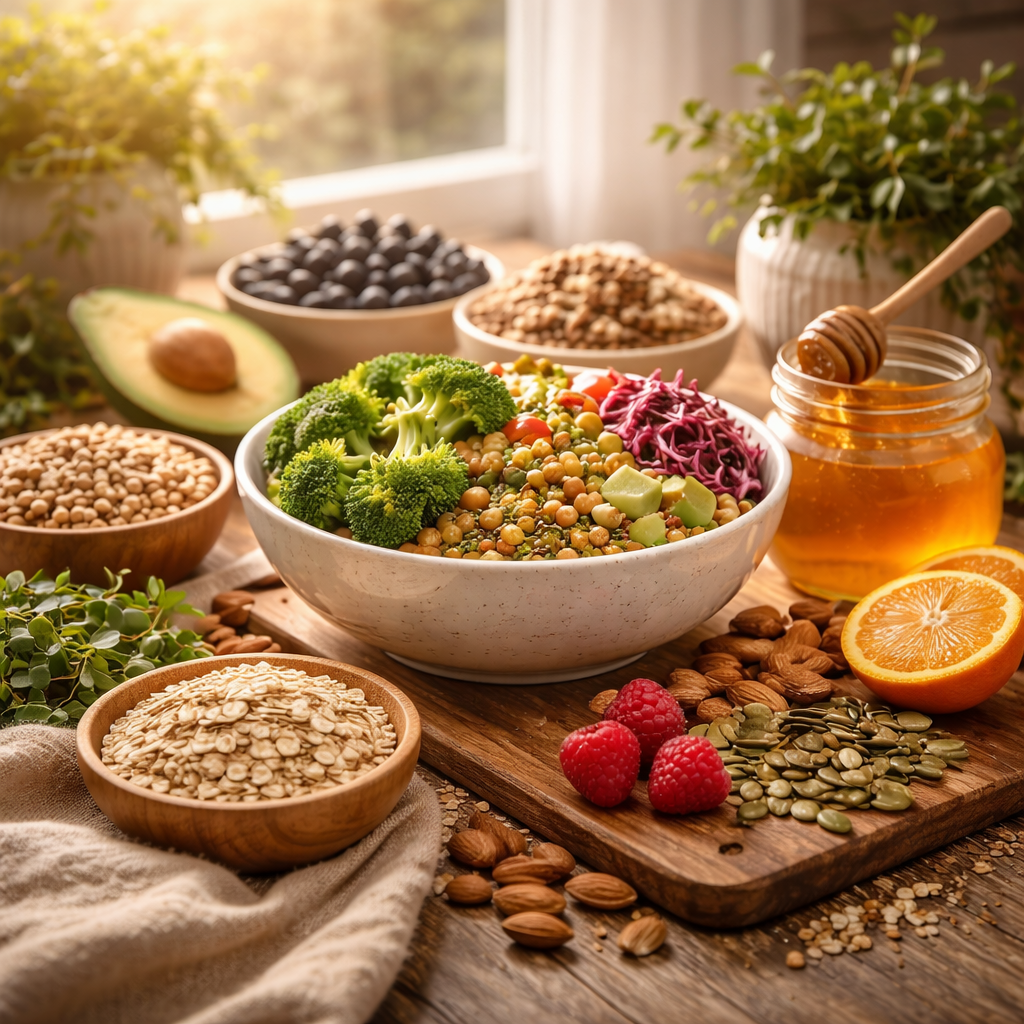
Foods naturally rich in fibre include vegetables, fruits, legumes, whole grains, nuts and seeds. These foods do more than fill the stomach. They nourish the gut environment.
A steady intake supports digestion, appetite regulation and metabolic balance over time.
Why Fibre Helps You Feel Satisfied
One of fibre’s most overlooked benefits is satiety.
Fibre slows digestion and stabilises blood sugar, which helps reduce the sharp rises and crashes that drive cravings.
This is why meals with adequate fibre tend to feel more grounding and satisfying, even when portions are moderate.
Feeling full is not about volume. It is about signal strength.
A gentle way to support fibre intake
For some people, small daily additions can make a meaningful difference.
Raw honey naturally contains oligosaccharides that act as prebiotics, helping feed beneficial gut bacteria. Used in small amounts as part of a balanced diet, it can gently support gut health alongside fibre-rich foods.
If you are looking for a simple way to support the gut environment, a small daily serving of high-quality raw honey can be a supportive addition rather than a replacement for fibre-rich meals.
A long-term perspective
Fibre is not a trend nutrient.
It does not promise quick fixes or dramatic results. Instead, it quietly supports the systems that regulate appetite, hormones and digestion over time.
When fibre intake improves, many people notice fewer cravings, steadier energy and better digestive comfort, not because something extreme changed, but because something essential was restored.



Leave a comment
This site is protected by hCaptcha and the hCaptcha Privacy Policy and Terms of Service apply.