After Ramadan: Don’t Shock the Body
As we come to the end of Ramadan, with Eid shortly upon us, many people begin to feel two things at once.
Gratitude and tiredness.
Lightness and sadness.
Relief and a quiet fear of losing what the month gave them.
There is often so much focus on preparing for Ramadan that very little is said about how to leave it well.
But the transition out of Ramadan matters.
After a month of altered sleep, changed meal timing, lighter digestion and spiritual rhythm, the body does not respond well to sudden excess. And neither does the heart.
The days after Ramadan are not the time to shock the system. They are the time to carry the month forward with wisdom.
Why the Body Feels Sensitive After Ramadan
By the end of Ramadan, the body has adapted to a different pattern.
Meal timing has shifted.
Caffeine may have reduced.
Portion sizes may be lighter.
Blood sugar rhythms may have steadied.
Even the digestive system has become used to longer periods of rest.
When Ramadan ends, many people instinctively swing back too quickly.
Large meals. Rich desserts. More caffeine. Less sleep. More socialising. Less routine.
It is understandable. Eid is a celebration.
But from a physiological point of view, this sudden shift can leave people feeling bloated, sluggish, headachy and emotionally flat within a day or two.
The body needs transition, not whiplash.
Food Still Needs Gentleness
After fasting, the digestive system often remains more sensitive than people realise.
Heavy, rich meals can feel exciting in the moment but difficult later. Energy dips return more quickly. Bloating increases. Sleep becomes lighter again.
This does not mean avoiding celebration or eating with joy.
It simply means pacing it.
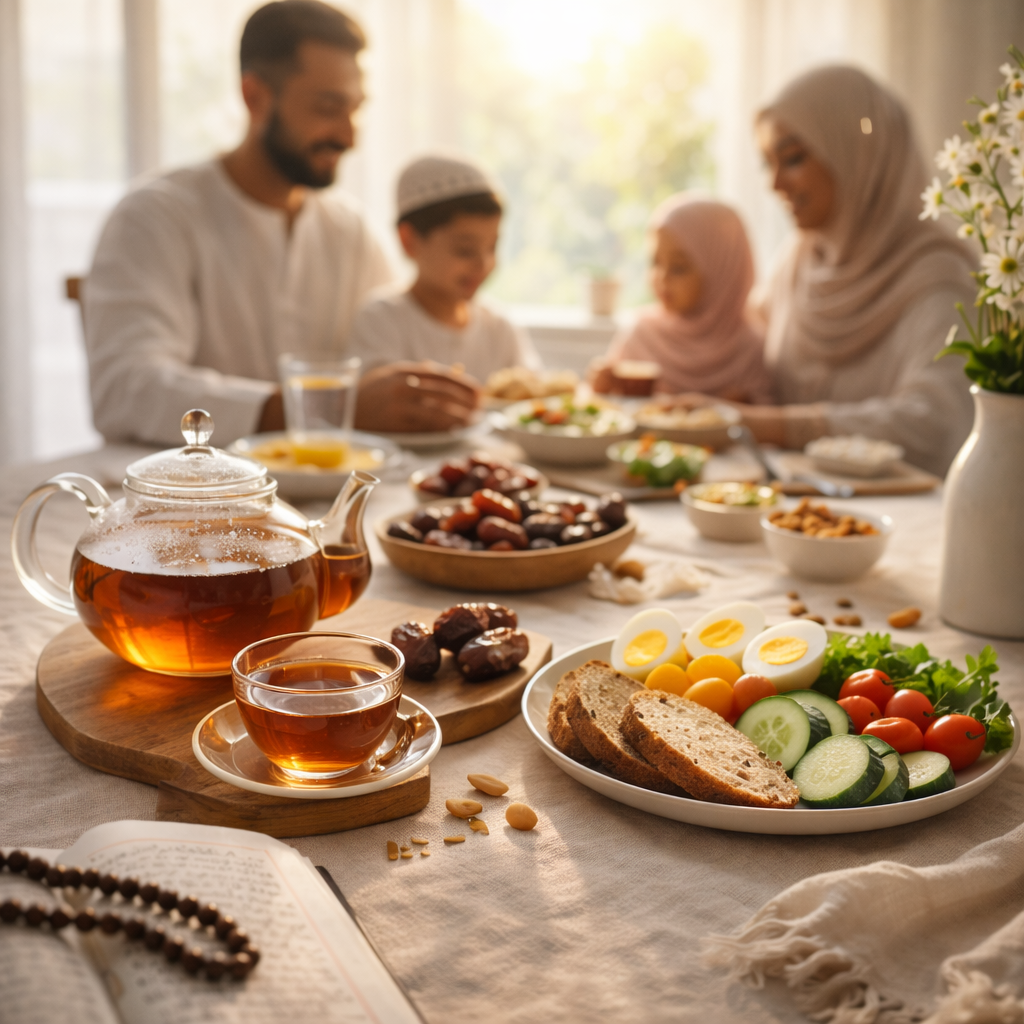
A lighter start to the day, balanced meals around gatherings and a little space between indulgent foods can make Eid feel far better physically.
Celebration feels easier when the body is not overwhelmed.
Caffeine and Sugar Can Hit Harder
After a month of reduced intake, caffeine and sugar often feel stronger than usual.
This is why some people feel jittery, anxious or suddenly tired after reintroducing them.
The body has become more sensitive. Going straight back to multiple coffees and heavy sweets can easily disturb sleep, appetite and energy.
A steadier return usually works better.
If sweetness is part of the celebration, keeping some of it simple can help. A small amount of raw honey in a warm drink or breakfast can be a gentler way to reintroduce sweetness than jumping straight into heavily processed foods.
Again, the point is not restriction.
It is a softer landing.
Protect the Sleep Rhythm If You Can
Ramadan often changes sleep patterns, and Eid can stretch them further.
Late nights around celebration are understandable, but if sleep is already fragile, adding several more short nights can make the post-Ramadan dip feel much stronger.
Even one or two earlier nights after Eid can make a huge difference to mood, energy and emotional steadiness.
The body recovers quickly when rhythm returns.
Don’t Drop Every Good Habit at Once
One of the hardest parts of leaving Ramadan is the feeling that everything good belongs only to the month itself.
But the point of Ramadan is not to create a temporary version of yourself. It is to leave traces that continue.
This is where gentle continuity matters.
Not everything.
Just something.
A calmer bedtime.
Less sugar.
A quieter morning.
One moment of du’a.
One protected prayer.
The body and soul both respond well to continuity.
Eid Is Joy, Not Excess
Eid is a gift. It should feel joyful, open and grateful.
But joy and excess are not the same thing.
There is a difference between celebration that nourishes and celebration that overwhelms. When we carry a little of Ramadan’s rhythm into Eid, the day often feels lighter, more present and more blessed.
The goal is not to hold onto Ramadan by force.
It is to leave it in a way that honours what it taught.
Carry the Month Forward Gently
When the month ends, it is natural to feel a shift.
But the body does not need to be thrown from fasting into overload. And the heart does not need to be thrown from worship into distraction.
A gentle transition protects both.
As Ramadan closes and Eid approaches, think less about “going back to normal” and more about what kind of normal you want to keep.
That is where the month continues to live.


Leave a comment
This site is protected by hCaptcha and the hCaptcha Privacy Policy and Terms of Service apply.