
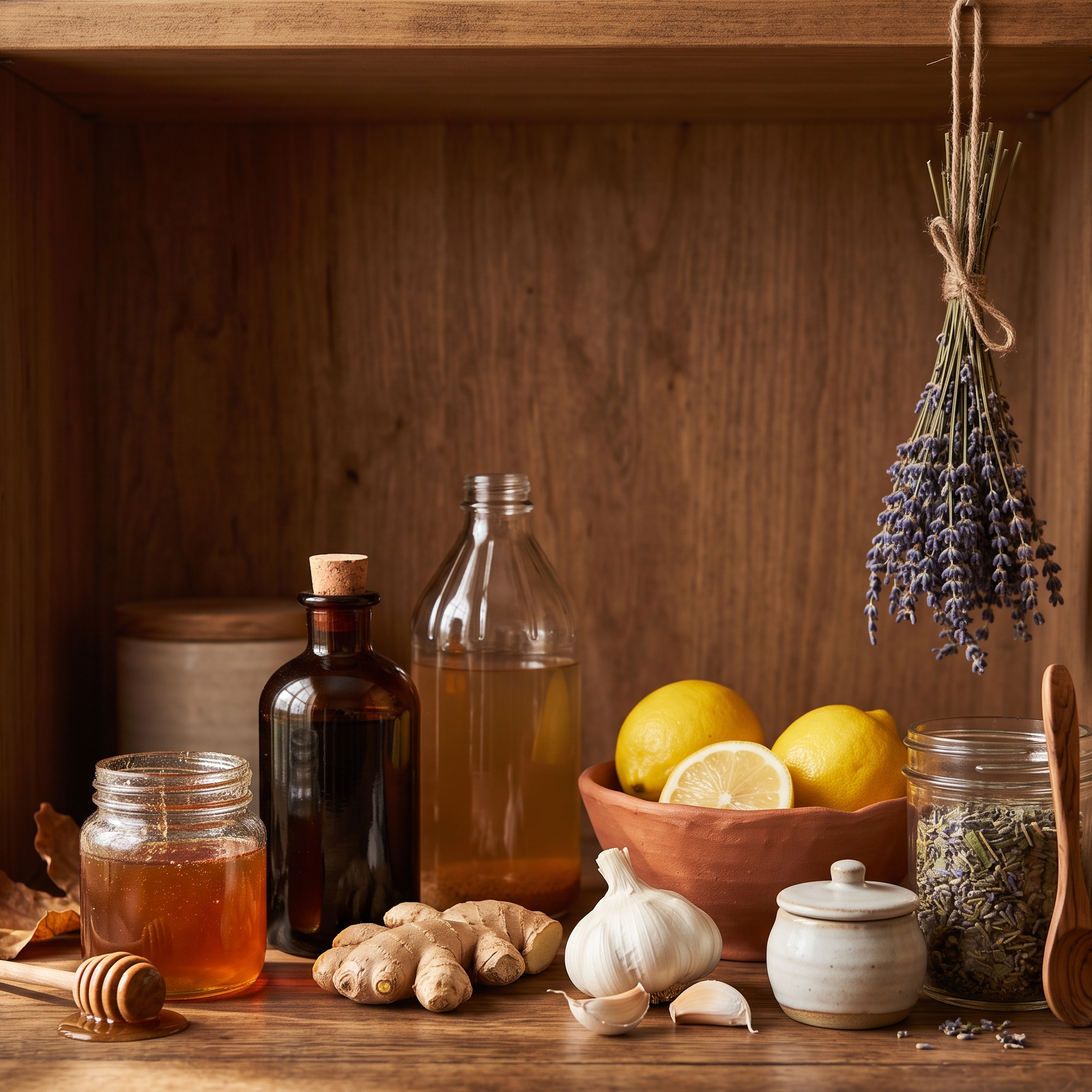
Building a Natural Medicine Cabinet: What's Actually Worth Keeping at Home
There is a certain satisfaction in reaching into your own cupboard when someone in the house starts sniffling, rather than trudging to the pharmacy at 9pm for another box of something. For generations, that is exactly how families managed the everyday coughs, colds and scratchy throats that come with the changing seasons. A small collection of trusted, natural staples, ready when needed.
Somewhere along the way, a lot of us lost that. We reached for the packet instead. And there is nothing wrong with modern medicine when it is genuinely needed. But for the minor, everyday stuff, there is real value, and real comfort, in having a well-stocked natural medicine cabinet at home.
As we head towards autumn and the season of sniffles, here is what I think is worth keeping in yours, and the reasoning behind each one.
Raw honey: the cornerstone
If you keep only one thing, make it raw honey. It is the most useful and best-evidenced item on this list.
This is not just tradition talking. The UK's own National Institute for Health and Care Excellence, NICE, along with Public Health England, now recommends honey as a first port of call for coughs, ahead of many over-the-counter cough medicines. The evidence shows honey helps soothe a cough and ease throat irritation, partly by forming a protective coating over the irritated tissue. One well-known study found that honey given before bed helped both cough symptoms and sleep quality in children.
A spoonful straight, or stirred into warm water with lemon, is one of the simplest remedies there is for a scratchy throat or a nighttime cough. Keep a good raw honey in the cupboard and you will reach for it constantly.
Apple cider vinegar: the all-rounder
Raw, unfiltered apple cider vinegar earns its place. It has a long traditional use for digestion, and a small amount in warm water with honey is a classic remedy people reach for at the first sign of a cold or a sore throat. The acetic acid it contains has been linked in some research to antimicrobial effects.
Beyond the cold season, it is useful day to day. A little in water before a heavy meal to support digestion, or as the base of a simple daily tonic. It is one of the most versatile things you can keep in the cupboard.
Black seed oil: the traditional powerhouse
Black seed, or Nigella sativa, has been used for centuries across many cultures, and has become a staple in the modern natural cabinet too. Its active compound, thymoquinone, has been studied for anti-inflammatory, antioxidant and immune-supporting properties.
A small daily dose through the colder months is a traditional way many people support their general resilience when the coughs and colds start going around. It has a strong, distinctive, slightly peppery taste, so many people prefer it stirred into honey, which happens to combine two of the most useful items on this list into one.
Ginger: the warming staple
Fresh ginger root is one of the most useful things in any kitchen, medicinal or otherwise. It has anti-inflammatory properties, is well-evidenced for easing nausea, and is a traditional remedy for soothing coughs, colds and sore throats. Grated into hot water with lemon and honey, it makes one of the great comforting drinks when you are feeling run down. Keep a knob of it in the fridge, or a jar of ginger-infused honey in the cupboard for convenience.
A few kitchen basics worth having
Alongside the star items, a few everyday things deserve a mention.
Lemon for vitamin C and for cutting through congestion in a hot drink. Garlic, one of the most studied natural antimicrobials, brilliant raw in food when you feel something coming on. Turmeric for its anti-inflammatory compound curcumin, best taken with a pinch of black pepper which dramatically boosts its absorption. And plain salt, for a saltwater gargle to soothe a sore throat, or a saline rinse to clear a stuffy nose, both simple and effective.
For the skin and the scrapes
A natural cabinet is not only about coughs and colds. A few things cover the everyday bumps of family life.
Raw honey again earns its place here, as it has traditional use for minor wound care thanks to its natural antibacterial properties. A good natural balm covers dry skin, chapped lips and rough patches. And something soothing for irritated or itchy skin, like a gentle natural cream, is worth having for the eczema and dry-skin flare-ups that the colder months so often bring.
What to keep it in, and a note on sense
Keep your natural staples together somewhere cool and dark, a specific shelf or a box, so that when someone is under the weather you are not hunting through the kitchen. Half the value of a natural medicine cabinet is simply having it ready.
One important note however is that a natural medicine cabinet is for the minor, everyday things. The scratchy throats, the seasonal sniffles, the dry skin, the run-down feeling. It is not a replacement for proper medical care. High fevers, breathing difficulties, symptoms in very young babies, anything severe, persistent or worsening, or anything that simply worries you, needs a doctor, not a spoonful of honey. The wise approach has always been to use natural remedies for the small things and to know, clearly, when something needs more.
Used that way, a well-stocked natural cabinet is one of the most satisfying and useful things you can have in a family home. It saves you money, it saves late-night trips to the shop, and it connects you to a way of caring for your household that families have relied on for a very long time.
Where to start
Do not feel you need everything at once. Start with the cornerstone, a good raw honey. Add apple cider vinegar and some black seed oil. Keep ginger, lemon and garlic in the kitchen. Build from there as you go.
By the time the first proper cold of the season arrives, you will be glad you did.



Leave a comment
This site is protected by hCaptcha and the hCaptcha Privacy Policy and Terms of Service apply.